Every story here began with a simple conversation.
These are the voices, moments, and lived experiences that shape Sarnia—captured one person at a time.
Each story here began the same way: a conversation on a sidewalk, in a park, outside a storefront, or along the river. No script. No expectations. Just a willingness to pause and listen. What emerges are glimpses into lives that are often more complex, resilient, and thoughtful than we assume when passing by.
Take your time here. Read slowly. You may recognize someone. Or, just as likely, you may begin to see a stranger differently the next time you pass them on the street.
_______________
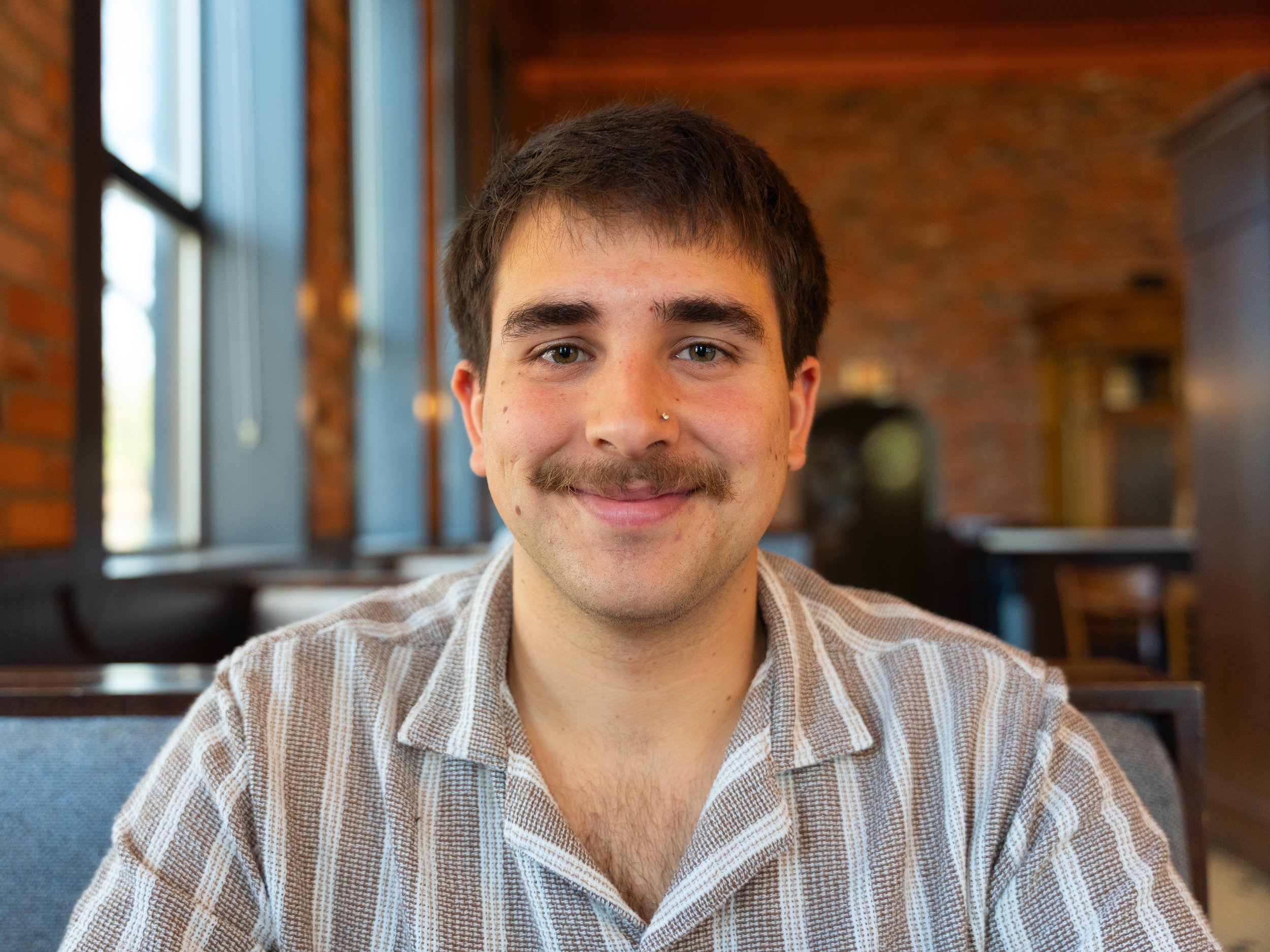
From dirt bikes to building community
Some people discover entrepreneurship by reading business books. For Djuro Landon, it began with a dirt bike... and his grandfather.
Raised in Petrolia, Djuro grew up in a family that valued both hard work and education. His mother works for the local school board; his father is a millwright in the skilled trades, and his older sister recently graduated from nursing school with plans to attend medical school.
Djuro attended École Secondaire Franco-Jeunesse, but even as a teenager, he found himself drawn toward a different path—one where effort, discipline, and calculated risks were rewarded.
Long before he ever became an entrepreneur, he was racing dirt bikes.
"I love and breathe anything with two wheels," he told me. "I started riding when I was two years old and raced at the amateur pro level until I was about sixteen."
Motocross taught him more than how to navigate a track. It taught him that success wasn't handed to anyone.
"It's an individual sport," he explained. "From a young age you're taught that if you're willing to sacrifice the time and energy, you'll be rewarded."
At about ten years old, another influence entered his life.
"My grandfather started taking me to flea markets and garage sales." While most kids were simply looking for toys, Djuro was learning something much different.
"He taught me about buying and reselling."
That simple lesson sparked something. "I just combined the two," he said, referring to the work ethic he learned from racing and the business lessons he learned from his grandfather. "Ever since then I've been passionate about the entrepreneurial path and wanting to start a business of my own."
After high school, Djuro recognized another opportunity—this time in the skilled trades.
While attending a trades convention at Fanshawe College, he climbed into a crane simulator for the first time.
"I fell in love with it."
That moment led to a co-op placement with Mammoet Crane Inc., which became a summer job and eventually an apprenticeship. Today he is building a successful career as a crane operator, but his ambitions extend well beyond his day job.
His latest venture isn't about construction. It's about connection.
Djuro founded Not Alone. Not Stuck. A community designed to bring men together who want more from life.
"It is a connection hub for men," he explained. "Whether you're starting a business, wanting to get into the gym, or simply looking to improve yourself, it's a place for men to connect."
The community has attracted two distinct groups: young men who are just beginning their careers and entrepreneurs who have already started building businesses of their own. Not Alone. Not Stuck. has grown to 23 active members in just two months since launching.
According to its mission, Not Alone. Not Stuck. exists to help men develop discipline, accountability, fitness, personal growth, and meaningful relationships. It provides a structured environment for those who feel capable of more but find themselves repeating the same patterns, while also connecting members with professional resources when they need them.
The schedule reflects that mission.
Monday evenings begin with an accountability workout at Kinetics Fitness. Wednesdays bring Coffee and Growth nights at Coffee Lodge, where members discuss the goals they're pursuing in business and life. Thursdays are training nights at Purebred Fight Club, and Saturdays begin with a 5-kilometre Run Club at Canatara Park.
Each event is intentionally designed to give men different ways to connect—whether through fitness, conversation, personal growth, or simply spending time together.
The organization is also forming partnerships with local businesses to create unique experiences and opportunities for its members. One recent workshop featured Dr. Joan McMillan, who guided the group through understanding human behaviour, thought patterns, and practical ways to overcome feeling stuck.
For Djuro, however, this isn't simply another business venture.
It's a movement.
"I want to gain the most access to the men out there," he said. "This is way beyond me. Every man needs this. There really isn't anywhere for guys to connect anymore. Social media has everyone stuck to their phones instead of having real conversations."
Listening to Djuro, I couldn't help but notice how each chapter of his life seems to have built upon the last.
The discipline came from motocross.
The business mindset came from weekends spent with his grandfather at flea markets.
The career came from taking a chance on a crane simulator.
And today, all those experiences have combined into something much larger than himself—a young entrepreneur using what he's learned not only to build a future, but to help other men build theirs as well.
To learn more about Not Alone. Not Stuck., become a member, or explore partnership opportunities, visit www.notalonenotstuck.com or contact notalonenotstuck@gmail.com.
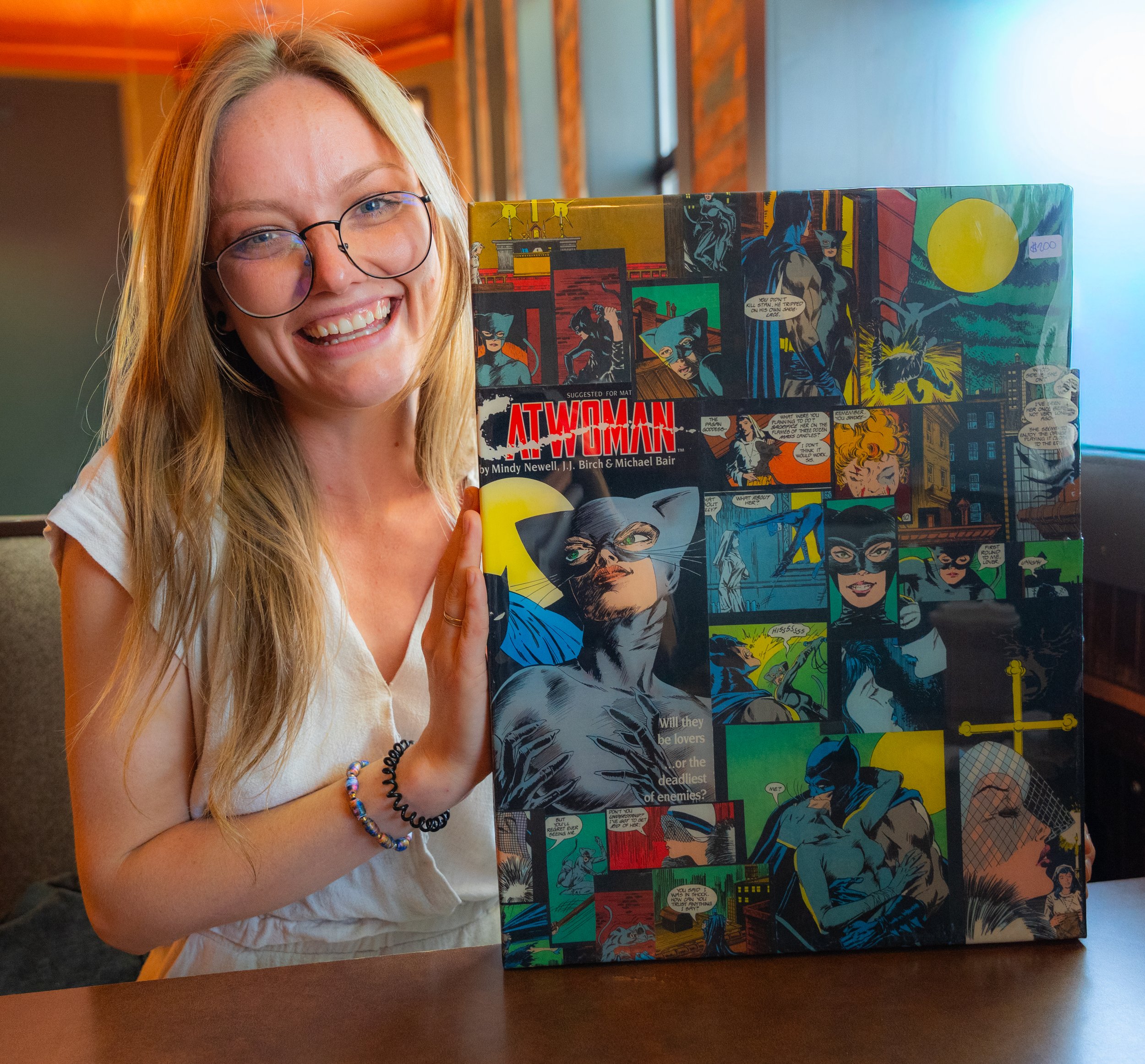
Heather Lalonde: When life turns the page
Some people have a gift for making complete strangers feel like old friends. Heather Lalonde is one of those people.
She has the kind of energy that fills a room before she says a word. Quick to laugh and genuinely curious about the people she meets, she has an effortless way of turning casual conversations into meaningful connections. Ask Heather what her favourite question is, and she won't hesitate.
"What's your earliest memory?"
It's the kind of question that reveals something unexpected about a person—something Heather has always been drawn to. Beneath her outgoing personality is a deeply creative spirit, someone who notices beauty in ordinary moments and isn't afraid to express it. Whether she's sharing a story, exploring a new artistic idea, or simply making someone smile, Heather brings warmth, enthusiasm, and authenticity to every interaction.
Born and raised in Sarnia, Heather is an only child and now lives with her father and her two children in the same house where she spent her teenage years—a home filled with both memories and new beginnings.
For years, Heather worked at Tim Hortons, where she developed the customer service skills that would later serve her well in an entirely different career. When she was hired by a local insurance brokerage, she threw herself into learning everything she could. The company had an exceptional training program, and Heather devoted herself to studying until she earned her RIBO (Registered Insurance Brokers of Ontario) licence.
Laughing, she remembers just how dramatic the career change felt.
"I was making double-doubles before this. It was scary!"
Only a month after starting her new job, Heather's manager was promoted, and she unexpectedly inherited her former boss's entire book of business—more than 800 insurance policies.
The timing couldn't have been more overwhelming.
At the very same time, Heather was navigating a difficult custody battle with her former partner. Suddenly she was balancing the demands of hundreds of clients while trying to hold together every other part of her life.
Despite the pressure, Heather persevered. With the inherited client portfolio came commission income, and for the first time in her life she was earning more money than she ever had before.
With greater financial independence came something else she hadn't experienced in a long time: freedom.
After her relationship ended, Heather embraced life outside of work. She found herself enjoying Sarnia's live music venues and local bars, where evenings were filled with laughter, conversation, and the excitement of discovering who she was becoming. It became a season of rebuilding—a time when responsibility was balanced by friendship, confidence, and the simple joy of living in the moment.
Still, something was missing.
"It was exhausting trying to make that job fun," Heather says. "I really hadn't tapped into being a super creative person. I've always been an artist."
That creative side eventually found its outlet in an unexpected medium: comic books.
Today, Heather creates vibrant works of art using comic book decoupage—the process of cutting images from comic books and arranging them into colourful collages before sealing them beneath multiple layers of epoxy. The finished pieces transform familiar superheroes and comic art into striking contemporary artwork.
The idea began almost by accident.
"A friend and I wanted to have a craft night. We went to the comic bookstore, picked up some comics, started cutting them up and making collages. It started as something healthy and creative to do. It just started as an idea."
For Heather, every piece begins the same way.
She reads the comic.
"It feels like a sin not to read a comic book before I cut it up—especially."
Because every page is printed on both sides, each decision carries weight.
"Sometimes it's a pivotal part of the story. You have to think not only about the images but also about the words on the page."
After selecting her favourite panels, Heather groups them by colour palette before arranging them across the canvas like a puzzle. Once she's satisfied with the composition, every piece must be carefully sealed.
"Epoxy is wet and heavy," she explains. "If the comic isn't sealed properly, the epoxy can seep underneath and create wet spots."
Even the slightest tilt in the canvas can ruin hours of work.
"Epoxy can be really tricky. It's definitely a skill that only comes with trial and error—and a lot of persistence. I remember the first time I used epoxy. I think I wanted to cry. It was really intimidating."
Like many artists, Heather has learned that creativity is as much about perseverance as inspiration.
Earlier this year she showcased her work at the Sarnia Pop Culture Show, an experience she describes as a success. She also displayed her artwork during Green's Christmas Market, where selling pieces gave her both confidence and valuable insight into her audience.
"It helped me understand that I need to be a little more specific and niche with the markets I apply to. My work isn't for everyone—and that's okay."
Her next major event will be the London Comic Con this September, where she'll once again share her colourful creations with fellow comic book enthusiasts.
Heather offers artwork beginning at 10-by-10 inches, but making art isn't only about creating something beautiful. It's also about making it attainable.
"It's really important for me to make my art accessible to everybody because when people make their art accessible to me, it doesn't go unnoticed."
Perhaps that's what Heather has been doing all along.
Whether she was serving coffee, helping clients navigate insurance, asking someone about their earliest memory, or transforming the pages of a comic book into something entirely new, she's always been finding ways to connect with people.
Sometimes all it takes is a conversation.
Sometimes all it takes is a comic book.
And sometimes, with enough patience, creativity, and persistence, even the ordinary can become a work of art.
You can learn more about Heathers creations on Instagram at comicbookcreations.
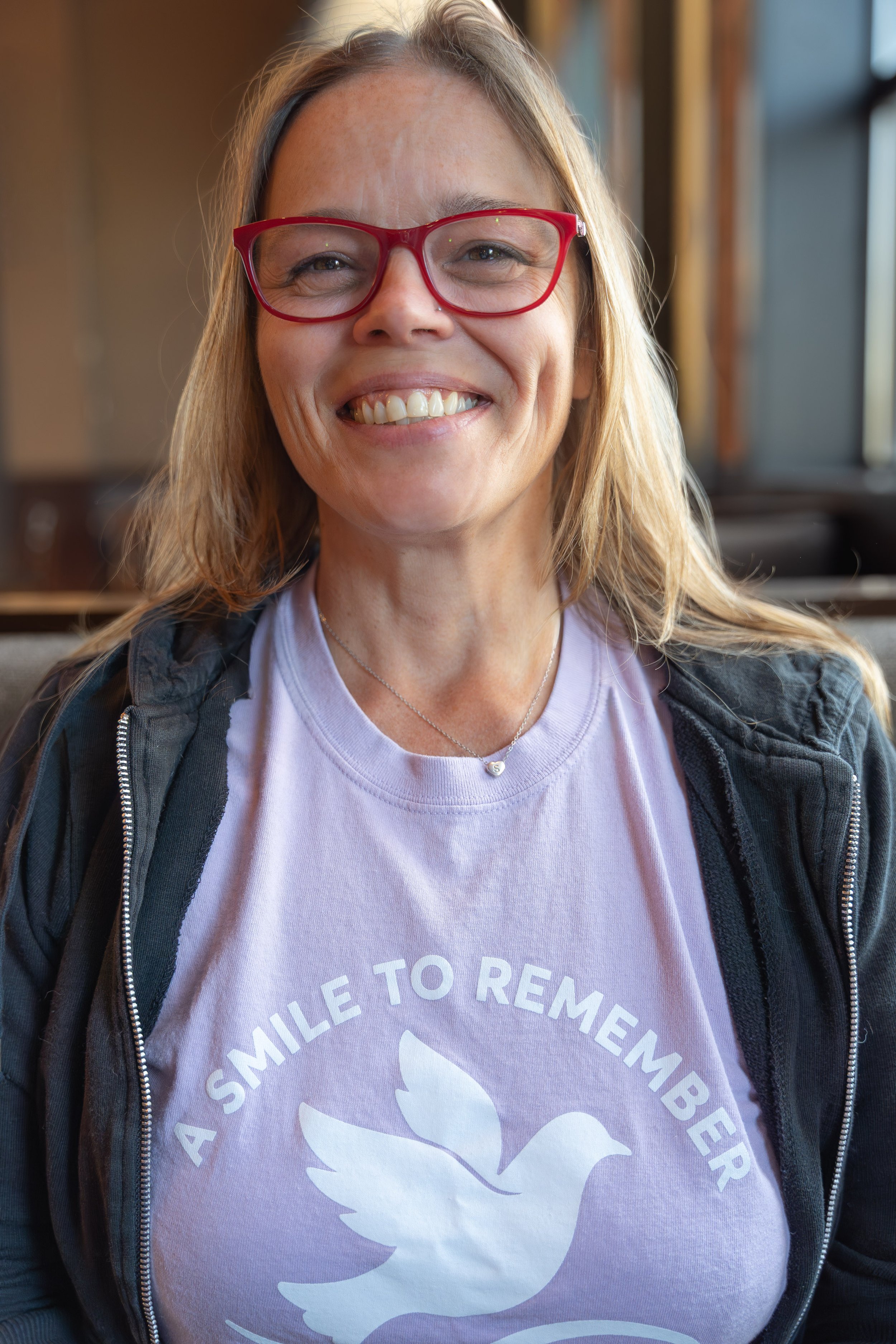
A smile to remember: How Lambton paramedics are granting final wishes
For the past 24 years, Sherry Tupholme has served the residents of Lambton County as a paramedic. She has responded to emergencies, comforted families during difficult moments, and dedicated her career to helping others. But some of her most meaningful work happens outside of her regular shifts through an organization she helped build called A Smile to Remember.
A Smile to Remember is a volunteer, paramedic-based organization that grants palliative patients one final outing of their choice in Sarnia-Lambton. Patients are often referred through the palliative care team at Bluewater Health.
"If the patient is in palliative care, whether it be in hospital or hospice, the nurses all know about our program and if it is a good fit they will tell the family," Sherry explains. "It must be the patient's wish and not the family's."
The program is designed for patients who are unable to sit in a regular vehicle or who require specialized medications, monitoring, or equipment that would otherwise make an outing impossible.
The idea was first introduced in 2019 when fellow paramedic Steve Adlington approached his colleagues with a vision of helping palliative patients experience one final meaningful moment outside of a healthcare setting. A call-out was sent to Lambton County for paramedics to gauge interest.
Sherry immediately saw the potential.
"I jumped right on it," she recalls.
Her role was to research how the program could operate. What she discovered surprised her.
"I reached out to a bunch of different Wish programs and discovered that there were no paramedic-based programs in North America. I reached out to a whole bunch of other Wish programs to see how their programs ran and from there I took their best ideas and kind of pieced it together."
The original model involved volunteers meeting patients and families ahead of time to create familiarity before the wish day arrived. Then COVID changed everything. Face-to-face introductions were no longer possible, forcing volunteers to adapt while continuing to serve patients safely.
When the program launched, organizers posted a sign-up sheet for volunteers.
The response was overwhelming.
That first call attracted 60 paramedics willing to donate their personal time to help fulfill wishes.
Today, when a request comes in, a mass text is sent to employees seeking volunteers. One important requirement remains unchanged: volunteers must be employees of Lambton County Paramedic Services.
"We've had a lot of people reach out like nurses and PSWs," Sherry says. "But unfortunately, we've had to turn them down because of insurance purposes and liability."
The wishes themselves range from large community events to simple family moments.
One story from the pandemic remains especially memorable.
"It was a gentleman who was diagnosed with terminal cancer, and he wanted to go home for his birthday."
What followed was something nobody expected.
"There ended up being a parade of 200 cars that went by his house wishing him a happy birthday."
The impact of that day still resonates. When Sherry meets newly hired paramedics during orientation, she often shares a video from that wish as a way of explaining the program's purpose and the difference it can make.
Other wishes are quieter but no less meaningful.
"There are some big events and then there are some that are simply to be with family," she says. "One gentleman wanted to go home and just decorate a tree with his family one last time."
A common request reflects a unique Sarnia tradition.
"Fries under the bridge."
Sherry says local businesses have been incredibly supportive.
"Albert's/Susie's Ice Cream has been great. Whenever I walk in, they say, 'You're the wish lady!' And they always donate food and always give to the crew as well."
For the volunteers, every wish brings a mix of emotions.
"It's all for the feelings that you feel. You feel sad because you know that this is the last thing this person is going to do like this, but you feel proud that you are making this happen. You're happy because you're watching it happen."
The program's success has not gone unnoticed. Since A Smile to Remember began in Sarnia-Lambton, four other counties have adopted similar programs based on the model Sherry and her colleagues helped create.
Sherry's own path to becoming a paramedic wasn't straightforward.
As a single mother at age 25, she decided to return to school to build a better future. She enrolled in Medical Administration but quickly realized it wasn't for her.
"I was sitting in the classroom doing some transcription class or something. It was boring," she laughed. "I looked out the window and saw an ambulance screaming by with its lights and sirens and thought, I want to do that."
She enrolled at St. Clair College in Windsor, graduated, and began a career that has now spanned nearly a quarter century.
Listening to Sherry speak, it becomes clear that A Smile to Remember is about far more than transportation. It is about restoring dignity, creating memories, and giving patients one final opportunity to experience something meaningful on their own terms.
It is also a reminder of the remarkable people serving our community.
Most of us think of paramedics as the professionals who arrive during life's emergencies. We see the lights, hear the sirens, and trust that they will be there when we need them most. What we don't often see are the countless hours they volunteer outside of their shifts, giving up personal time with their own families to help complete strangers create one last cherished memory.
The paramedics behind A Smile to Remember receive no pay for these outings. They volunteer because they care. They volunteer because they understand that sometimes the greatest form of medicine isn't a treatment or procedure—it's helping someone spend one final afternoon with family, enjoy fries under the bridge, celebrate a birthday, or simply go home one last time.
Founded by Steve Adlington Jeff Brooks and Sherry Tupholme, A Smile to Remember began with a simple but powerful vision: helping palliative patients experience one final meaningful outing with dignity and compassion. Today, that vision continues through the dedication of program coordinators Sherry Tupholme, Amanda Klazinga, and Emily Frewin, along with the many paramedics who volunteer their time to make these special journeys possible. Thanks to their collective efforts, Lambton County has something truly remarkable to be proud of.
These are professionals who do far more than respond to emergencies. They go above and beyond, offering compassion when it is needed most and proving that even at the end of life, a simple wish can leave a lasting impact.
And for the families who receive that gift, it is truly a smile to remember.
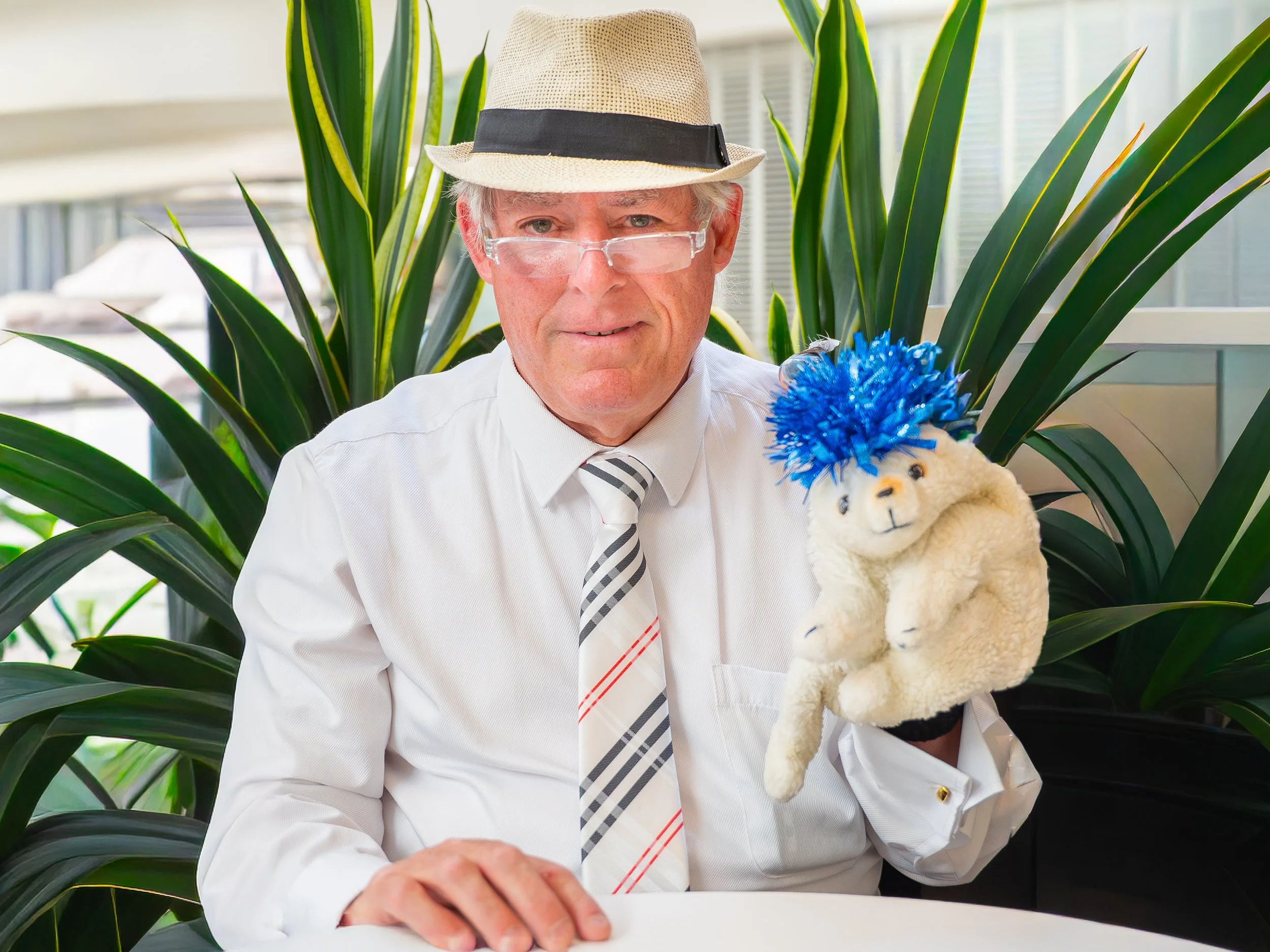
The man who makes Sarnia smile
If you've spent time driving through Sarnia, chances are you've seen them.
Perhaps you've noticed a colourful spinning umbrella dancing in the breeze. Maybe you've seen a puppet swaying to music while motorists wave from their vehicles, smile through open windows, or sound their horns in appreciation. As traffic passes by, people who moments before seemed lost in the concerns of daily life suddenly find themselves laughing, smiling, or simply paying attention to something unexpected and joyful.
That is exactly why George Thomas and George the Puppet are there.
They perform for one simple reason: to make people smile.
And if you've ever watched them for more than a few minutes, you'll quickly discover that they succeed.
Children stare in wonder. Adults slow down and grin. Some wave enthusiastically. Others return day after day just to see what George and his puppet companion are up to.
Together, they have become one of Sarnia's most unique and heartwarming sights.
But behind the spinning umbrella and the cheerful performances is a man whose life story is every bit as fascinating as the entertainment he provides.
After graduating from high school, George dedicated twenty years of his life to volunteer community service in Guelph. During those years he worked with people facing significant challenges and disadvantages. His commitment to helping others became a defining part of his life, and at one point he even put on a show for the Cystic Fibrosis Foundation.
Looking back on those years, George believes the experience changed him in ways he never expected.
"I learned more in my time working with people who had different disadvantages than I had."
It is a simple statement, but one that reveals a great deal about George's outlook on life. Rather than viewing community service as something he gave, he sees it as something that enriched him. The people he met taught him lessons about resilience, compassion, and humanity that stayed with him long after those twenty years came to an end.
Eventually, however, George realized he needed a different path.
With a laugh, he remembers the reality of working in community service.
"When I was 40, I didn't have any money, but that comes with the job. I thought I had better make some money and eventually found my way in the auto industry. I made very good money at piecework and was able to make enough money that when I was 55 I decided that was my last day."
For many people, retirement is a time to slow down and enjoy a quieter pace of life.
For George, it was the beginning of a new adventure.
Having always enjoyed music and performance, he decided to travel throughout Ontario, sharing his talents wherever he went. Since 2009, he has performed in twenty-two cities across the province.
Sarnia is one of those cities.
In fact, this is his second visit here.
The first time he came to Sarnia, he performed keyboard music at Germain Park. Back then there was no puppet. It was simply George and his music.
Today, things look very different.
George the Puppet has become an inseparable part of the performance, and George himself is still amazed by the reaction the puppet receives.
Life, however, almost took a very different turn.
In 2015, George collapsed in his driveway.
People gathered around him and attempted to find a pulse but were unable to do so.
What happened next remains one of the most remarkable moments of his life.
"Interestingly enough, there was a fella across the street that I had never met before, came to his window at that moment and saw a crowd of people across the street and somehow sensed there was a problem. He came running over and pushed through the crowd and the next thing I remember was in the hospital. This fellah was an EMS person. I didn't get a chance to thank him. I would like to thank him for that because if that hadn't happened then this man and George wouldn't be performing."
As George tells the story, it becomes clear that gratitude is something he carries with him every day. A stranger's willingness to act in a moment of crisis gave him more years of life, more opportunities to create, and more chances to make people smile.
Those additional years have allowed George to pursue another creative passion as well.
He is an author who writes under the name Edward J. Janzen.
"I started to write novellas and short stories based on people and places that I have lived in. Every one of those places on my journey has a story. Even my first trip to Sarnia has a story."
It's easy to understand why George enjoys storytelling. His own life has been filled with unique experiences, unexpected encounters, and memorable characters.
Perhaps that is also part of the reason he appreciates the puppet so much.
The puppet entered the spotlight almost by accident.
While performing in Hamilton, George noticed that audiences seemed particularly drawn to his puppet companion.
"I said OK, I'll just leave the keyboard in Hamilton and I'll take the puppet. I didn't think he would become this popular. He is a star."
When people suggest that George is the star, he quickly corrects them.
"Some told me that I am a star to which I said no it's not the same out there in the street because if I'm performing and I'm showcasing the puppet then I can perform with him."
The affection George has for the puppet is obvious. Rather than seeing it as a prop, he treats it almost like a performing partner. Together they create something playful and unexpected that captures people's imaginations.
heir performances are not limited to street corners.
Twice each week, George and George the Puppet visit the hospital.
There, away from the traffic and passing vehicles, they bring moments of joy to people who may be experiencing some of the most difficult days of their lives.
George recalls one interaction that left a lasting impression on him.
"I had a woman at the hospital talk to me and she said that my dad had been very sick and I have been very worried about him and you came in one day and that was the only time I smiled that day."
For George, comments like that reinforce the value of what he does.
"People have a lot going on in their lives right now and this is the distraction that they need."
There is wisdom in that observation.
Life can be heavy. People carry worries about family, health, finances, work, and countless other challenges. Sometimes what they need most is not a solution, but simply a moment to breathe, smile, and remember that joy still exists.
Perhaps nowhere is that more evident than in the reaction of children.
When I met with George, one of George the Puppet's biggest fans was nearby.
Four-year-old Sawyer Gardiner came with her father, Adam, and her brother Phinley. George explained that whenever he walks past the Gardiner home on his way to perform, Sawyer races to the front window.
She waves frantically and greets the pair with an enormous smile.
There is something beautiful about that image.
A child watching from a window, excited to see a puppet walk by.
A performer who takes time to wave back.
A simple connection that brightens both of their days.
In many ways, that interaction captures the essence of George Thomas and George the Puppet.
They are not selling anything.
They are not seeking fame.
They are not asking for recognition.
Instead, they offer something that has become increasingly rare: simple kindness.
In a world where people often hurry past one another without making eye contact, George and his puppet invite people to pause. To smile at a stranger. To wave. To laugh. To remember the childlike wonder that still exists beneath the responsibilities and worries of adulthood.
Over the past several months, George Thomas and George the Puppet have become one of Sarnia's most magical sights. They transform ordinary street corners into places of imagination and connection. They bring comfort to hospital patients, delight to children, and unexpected happiness to people simply driving home from work.
Their performances may last only a few moments, but the smiles they create often last much longer.
And perhaps that is their greatest gift to Sarnia.
Through music, movement, imagination, and kindness, George Thomas and George the Puppet remind us that joy can still be found in the simplest places. They have become a gentle and magical presence within our community—two unlikely friends spreading happiness with one smile, one wave, and one moment of wonder at a time.

Sarnia’s Next Step: The story of Samara Kabat
Samara Kabat also known as ‘Sammy” is the kind of young person who makes you optimistic about the future of Sarnia.
At an age when many people are still trying to decide what direction they want their lives to take, Samara has already built an impressive resume as an athlete, performer, student, and community representative. Now, the Sarnia-born actor is preparing to step onto an international stage after landing a principal role in the new television series The Next Step: Cheer, a spin-off of the highly successful teen drama The Next Step. The series is now streaming on BBC and CBBC iPlayer in the UK.
Samara will play the role of Angel, a character she describes with a smile as “sassy.”
Born and raised in Sarnia, Samara comes from a busy and supportive family. Her mother, Jaime, manages Guest Services at Lambton Mall, while her father works as a Process Operator at CF Industries. Along with her younger sister and twin brothers, the family has also opened their home to foster children, creating an environment centered on care, opportunity, and support.
Her roots in the community run deep. Samara attended Saint Anne Catholic School for kindergarten before moving on to Rosedale Public School and later Northern Collegiate Institute and Vocational School. Today, she is studying Police Foundations at Lambton College and says she has a particular interest in one day serving with the Sarnia Police Service.
While acting may be opening exciting new doors, cheerleading has long been at the heart of Samara’s journey.
At just six years old, she became involved with Bluewater Cheer Athletics. “I went on the first day that Bluewater Cheer opened,” she recalled with a laugh. “It took me awhile to get into it, but I fell in love with it.”
That passion would eventually carry her far beyond Sarnia. Years of dedication, training, and competition helped her develop into one of the country’s elite young cheerleaders. In 2019, at only 12 years old, Samara earned a place on Junior Team Canada and helped bring home a silver medal on the international stage.
Her path into acting began much earlier than most people realize. “I did some modelling when I was little and then came a bit of acting, like small commercials,” she explained. “I was definitely better at modelling than I was acting.”
She also participated in theatre productions, gradually building confidence in front of audiences. Yet even with those experiences, Samara never expected that an opportunity like The Next Step: Cheer would come her way.
The opportunity arrived thanks in part to her brother, Michael, who learned that Executive Producer Amy Wright was searching across Ontario for talented young performers. Although Sarnia was not among the listed casting locations, Samara refused to see that as a barrier.
Instead, she submitted a video showcasing both her cheerleading skills and her personality. That single submission led to multiple Zoom interviews, followed by an in-person audition in Mississauga. Eventually, she received the call informing her that she had been cast as Angel.
Her success was not simply a matter of being in the right place at the right time. The production faced a unique challenge in finding performers who could excel in both acting and high-level competitive cheerleading.
“There are a lot of actors,” Samara explained, “but there are not a lot of high-level cheerleaders.” The role demanded exactly the combination of talents she had spent years developing.
Perhaps the most striking thing about Samara is not any single accomplishment, but the energy and enthusiasm she brings to everything she does. During our conversation, it became clear that she possesses a genuine curiosity about the world and a desire to fully embrace every opportunity that comes her way.
“I just love doing so many things,” she said. “Even in high school, I wanted to join every club. I wanted to be a part of everything.”
That mindset served her well during filming. The cast often worked twelve-hour days over a two-month production schedule.
“We started taping in August and ended September 20,” she said. “They move quick. That’s how they’ve always done it. They’ve always just moved super-fast.” In that short period, the production completed twenty episodes.
The experience also led to lasting friendships. Samara remains close with many of her fellow cast members and recently reunited with several of them while attending a cheerleading competition in Florida where her brother was competing.
When asked about her future in acting, Samara remains thoughtful and grounded. “I’m not 100 percent sure how much more I want to act,” she said. “But I love the people, and I love the show, and it’s about a sport I love.”
What stands out most about Samara is her willingness to pursue opportunities wherever they may lead. Whether competing internationally as a member of Junior Team Canada, studying toward a future career in policing, or stepping onto a television set viewed by audiences around the world, she approaches each challenge with determination and enthusiasm.
For a community like Sarnia, young people such as Samara Kabat serve as powerful reminders that talent can emerge from anywhere. Her success reflects not only countless hours of hard work and commitment but also the confidence to pursue opportunities beyond what might seem possible.
Samara Kabat will be representing far more than a television character. She will be representing the drive, resilience, and ambition that exist within so many young people growing up in Sarnia today—and she does so in a way that makes her hometown proud.
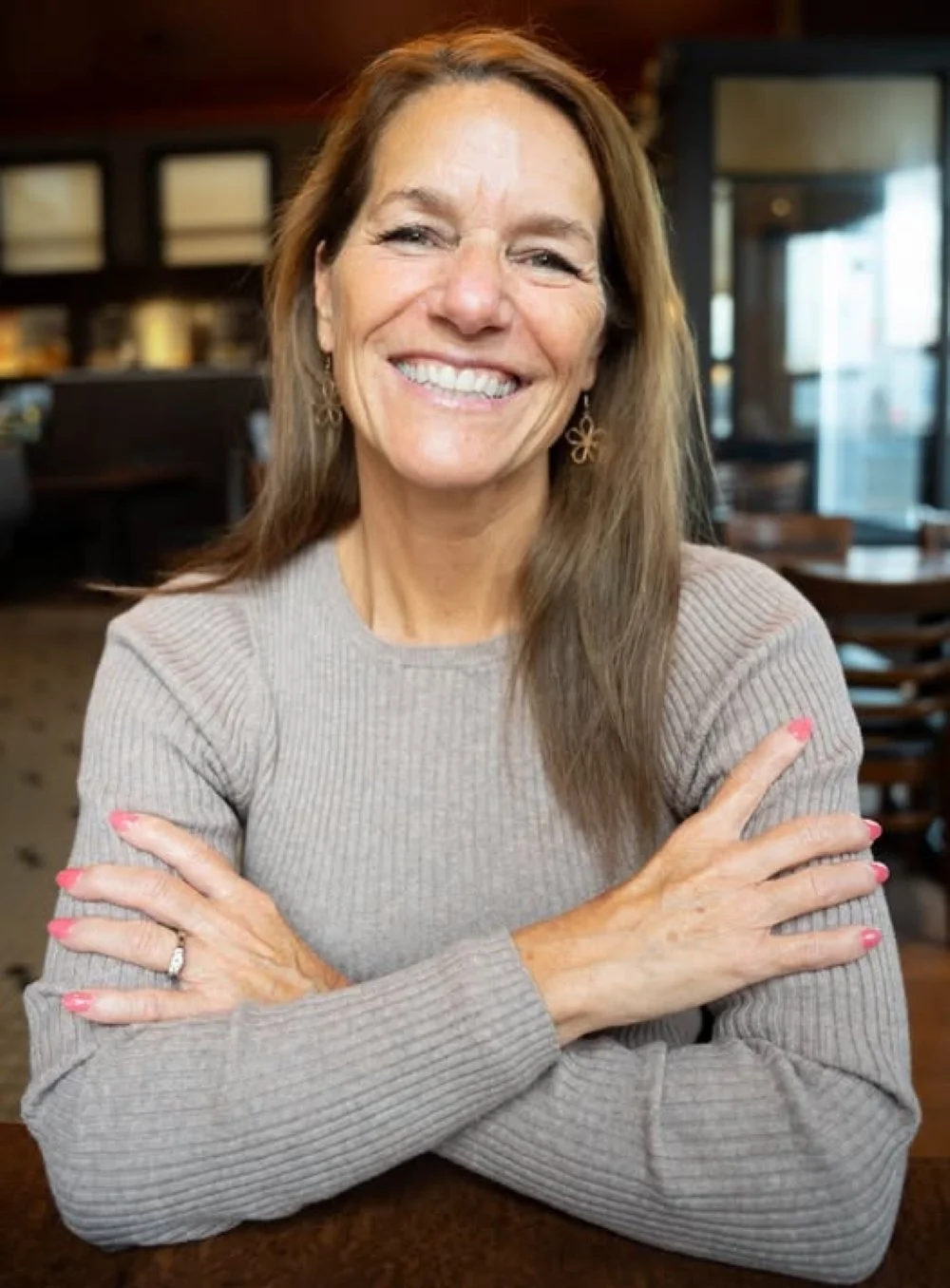
Kelly Krpan: A Life of Foster Care, Policing, and Quiet Leadership
There are some people whose lives seem to unfold in chapters defined by reinvention. Not because they seek hardship, but because each challenge placed before them demands courage, adaptability, and resilience. Sitting across from Kelly, it became clear very quickly that her story is not simply about survival. It is about determination, service, motherhood, and an unwavering commitment to creating stability for others even during the most difficult moments of her own life.
Kelly was born in Kitchener-Waterloo, where she eventually met her husband. She married at just 22 years old and welcomed her first child a year later. When the family later moved to Sarnia for her husband’s work as a social worker, Kelly began working as a pharmacy technician at Sarnia Pharmacy.
Not long after, Kelly and her husband made a life-changing decision: they became foster parents.
“It was one of the most awesome jobs I’ve ever done, to be honest,” Kelly told me. “We housed teenagers. We had little kids ourselves, so we didn’t want to have any more little ones in the house.”
For eight years, Kelly opened her home to young people who needed stability, compassion, and guidance. Even after her marriage initially ended, she continued fostering children while returning to Kitchener to be closer to family support. Eventually, Kelly and her husband reconciled and returned to Sarnia, where they expanded their family with two more daughters while continuing foster care work.
But life would again force Kelly to make difficult decisions.
Eventually, the marriage ended permanently. Kelly left with her children, the youngest child being 1 year and 4 months of age. She left carrying not only the emotional weight of separation but also the responsibility of protecting her children from unnecessary upheaval.
“I had to make sure that wherever I moved the children weren’t going to be uprooted from their school,” she explained. “My thing was to stay in the neighbourhood.”
She rented a home in Sherwood Village so the children could remain on the same school bus route and maintain some sense of normalcy during a deeply uncertain period.
At a crossroads in life, Kelly returned to school at Lambton College with plans to pursue nursing. During career counselling, she completed a series of personality assessments.
“Number one choice was a judge. Second was a lawyer and third was a police officer.”
Police work had never crossed her mind before.
“It just kind of felt right,” she said. “I thought, boy, that’s exciting.”
Kelly immediately enrolled in the Police Foundations program and committed herself fully to the challenge ahead. She began intense physical training and eventually travelled to London to complete the police fitness test.
“I didn’t have two nickels to rub together. My brother paid for it.”
She passed.
At 33 years old, while raising four children, Kelly began applying to police services across Ontario. Her goal was clear from the beginning.
“OPP was the one I really wanted.”
Then came the phone call that changed everything.
“I got onto the OPP. I was jumping for joy. I’m going to have a good life with my kids and I’m going to be able to do this.”
Kelly attended the Ontario Police College in Aylmer while her parents temporarily moved into her home to care for the children. She returned home on weekends whenever possible. Later training in Orillia pushed recruits through demanding military-style exercises during what was known as “hell week.”
Kelly not only succeeded — she excelled.
She won the “100 Percent Club” award for achieving perfect fitness testing scores, was selected as class leader for her OPP class, and was named one of the top ten officers recognized during the prestigious Sunset Ceremony in Orillia.
She was assigned to the OPP detachment in Point Edward.
After ten years serving locally, Kelly transferred to Wellington County OPP, later becoming Acting Sergeant for the Critical Incident Stress Response Team for Southwestern Ontario. The team provided support to officers dealing with traumatic incidents, including deaths, severe injuries, and emotionally devastating calls involving children.
“You have to have gone through a lot of critical incidents yourself,” Kelly explained, “so that you can understand how to offer support to officers going through it.”
One particular incident from 2003 still remains vivid in her memory. An eight-year-old child had been struck by a vehicle on a highway. Kelly arrived quickly and immediately began CPR.
“I knew he had passed, but we continued to try to revive him because you just don’t know.”
The child’s mother stood nearby asking if her son would survive. Later, Kelly had to deliver the heartbreaking news at the hospital.
That night, after her shift ended, Kelly drove to see her own children.
“I just needed to see them.”
Today, Kelly has returned to Sarnia once again. Her home became a multi-generational gathering place where her parents, her son, daughter-in-law, and grandson all lived together for a period of time. In her backyard are countless bird feeders originally placed there for her mother.
“Now I’m becoming the birdie,” she laughed. “Every morning with my binoculars, I just love it. She taught me that.”
Kelly has also found happiness again through her recent engagement to Brian, a retired police officer she once worked alongside years ago.
“He’s such a good guy,” she said warmly. “When he proposed, he asked my father for my hand. Chivalry is still alive.”
In retirement, Kelly has once again reinvented herself — this time through baking. Her home-based business, Baba’s Bread, has developed a loyal following throughout Sarnia through farmers’ markets, social media, and word-of-mouth. Beyond selling sourdough loaves, Kelly also hosts baking classes from her home, teaching others the process of creating artisan bread while fostering the same sense of warmth and connection that has defined much of her life.
Visit Baba's bread at :
https://www.facebook.com/groups/249109741622710
As our conversation came to an end, Kelly reflected on the lessons learned through decades of hardship, reinvention, and perseverance.
“It can be done if you put your mind to it,” she said. “I was able to provide a good life for my children and show them that working hard pays off.”
What struck me most about Kelly was not simply the number of challenges she faced, but the remarkable diversity of roles she embraced while facing them: foster parent, single mother, police officer, crisis response leader, caregiver, entrepreneur, daughter, and now grandmother. At every stage of her life, Kelly chose responsibility over resentment and service over self-pity.
People like Kelly quietly shape communities in ways that often go unnoticed. Through decades of caring for vulnerable youth, supporting traumatized officers, raising her children through adversity, caring for aging parents, and now building community through Baba’s Bread, Kelly has made Sarnia a more compassionate, resilient, and connected place.
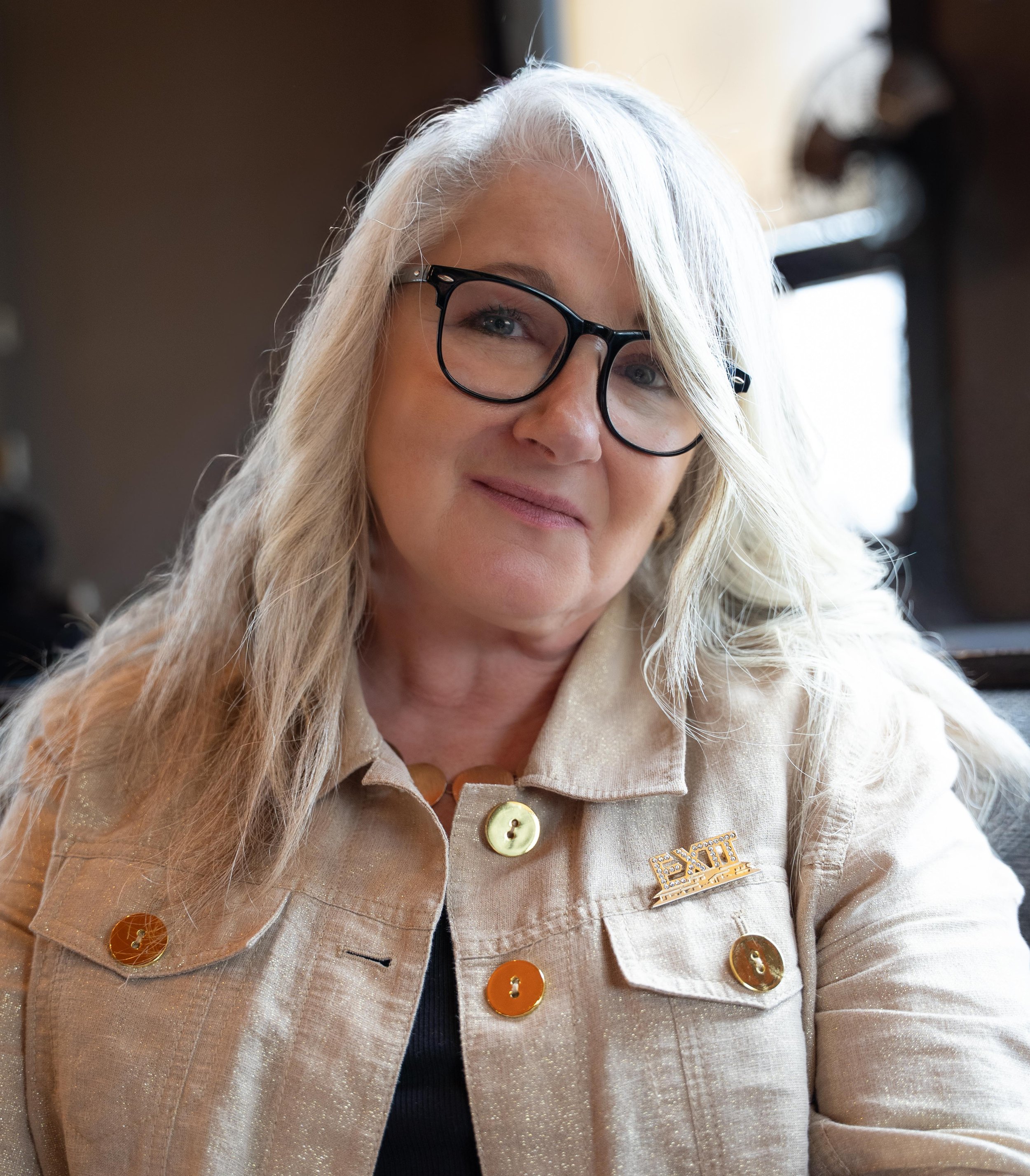
"We Don’t Take Mean Girls”: Kim Duffield and the Growth of Gal Pals Sarnia-Lambton
When you speak with Kim Duffield, one thing becomes immediately apparent: she is someone who refuses to stand still when life becomes difficult. Reinvention, perseverance, and community have quietly shaped nearly every chapter of her story.
Kim was born in Corner Brook but has lived in Sarnia for the past 50 years. She still keeps in touch with friends she met shortly after arriving in the city as a young girl — something she clearly values deeply. Those lifelong connections seem to reflect the kind of person Kim has become herself: loyal, community-minded, and invested in people.
She attended St. Joe’s for one year before moving on to Our Lady of Mercy and later St. Pat’s on East Street. After graduating, Kim studied print journalism, photography, and desktop publishing, interests that naturally led her into the printing industry. She spent nearly 10 years working with Quick Copy Printing before stepping away from the workforce to raise her children as a stay-at-home mother.
Later in life, Kim decided to return to school at the age of 40 to study executive administration. At the time, she was navigating the realities of separation and single motherhood while trying to build a more stable future. Much of the employment she found was temporary or contract-based, and even permanent opportunities often disappeared unexpectedly due to restructuring or mergers.
After one particularly frustrating experience, Kim remembers finally saying to herself:
“That’s it. I’m just done with this.”
Ironically, that moment became the turning point.
A friend who owned EXIT Realty asked Kim if she could temporarily help fill an administrative role during the uncertainty of the COVID-19 pandemic. What started as a short-term position quickly became permanent. As Kim became more familiar with the agents and the industry, she realized real estate might offer opportunities she had never seriously considered before.
“I started taking the real estate courses while sitting at my desk because everything was being done virtually,” she explained.
Kim describes herself as someone who is constantly learning. Today, she holds three college diplomas along with numerous certificates.
“I just constantly ask questions,” she said with a laugh.
Kim was married for 16 years and is the proud mother of three grown children. Her son is a Red Seal carpenter, while her twin daughters are both pursuing careers of their own — one studying to become a dental assistant and the other recently graduating from a PSW program.
But perhaps one of Kim’s most meaningful contributions to the community began with something very simple: friendship.
In 2022, after years of lockdowns and social isolation during COVID, Kim and a few close friends decided they missed spending time together.
“We were tired of not being able to go out and see each other after all of that being locked up,” Kim explained. “So we just started getting together, going out for dinner, a few girlfriends, and then I added more people to the Facebook page.”
That small gathering eventually evolved into Gal Pals Sarnia-Lambton — a thriving women’s social group that now has more than 2,000 members.
Kim jokingly describes it as “a lot of estrogen in one place,” but behind the humour is something genuinely impactful. The group organizes monthly dinners, paint nights, workshops, outings, and charitable initiatives that bring women together from all walks of life. The age range spans from women in their twenties to women in their eighties, and the group has become especially valuable for newcomers to Sarnia looking to build friendships and community connections.
As the group expanded, Kim realized there was also an opportunity to help local charities. After partnering with Michelle Parks from Tampon Tuesday during one of their outings, Gal Pals began organizing donations for organizations including River City Vineyard, Women’s Interval Home, the Humane Society, and several other community groups.
The organization behind the scenes is impressive. Volunteers help coordinate restaurants, events, donations, and outreach efforts. Kim emphasized that the group is very much a team effort, with many women contributing their time to make events successful.
There is no fee to join Gal Pals Sarnia-Lambton, and Kim says all women are welcome.
The group’s mission centers around empowering women through meaningful connection, mutual support, and shared growth.
And as Kim put it plainly:
“We don’t take mean girls.”
That sentence says a great deal about the atmosphere Kim and her team have worked hard to create.
In a time when many people feel isolated or disconnected, Gal Pals Sarnia-Lambton has become more than just a social group. For many women, it has become a place to meet friends, rediscover confidence, support local charities, and feel part of something larger than themselves.
What Kim Duffield has built deserves real recognition. Through persistence, compassion, and an incredible amount of volunteer effort, she has helped create a welcoming community that continues to make a positive impact throughout Sarnia-Lambton. It is clear that Kim’s kindness, leadership, and dedication have touched the lives of many women in this community — and Sarnia is better because of those efforts.
If you would like to learn more about Gal Pals Sarnia-Lambton or request to join the group, you can visit their Facebook page here:
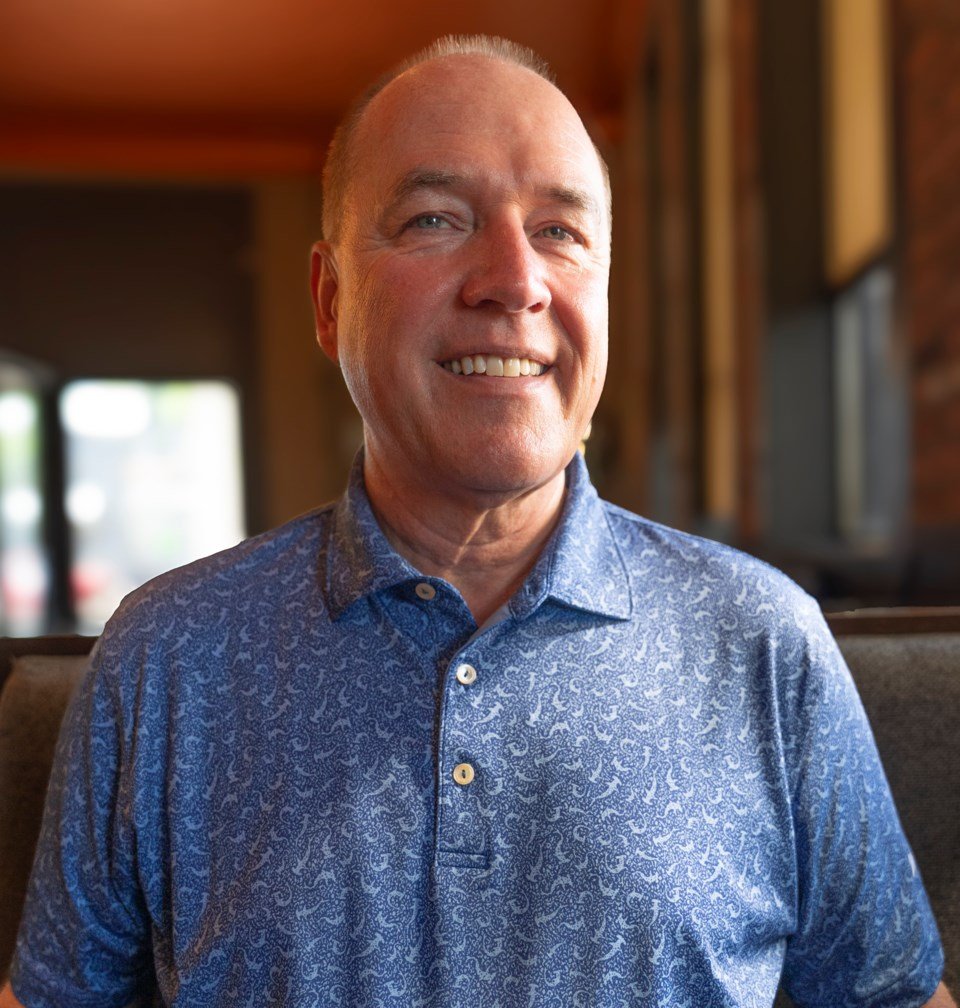
Dr. John Vargo: "Coming home was never in question"
If you meet Dr. John Vargo for the first time, one of the first things you’ll notice is his focus. When he talks to you, you have his full attention — genuine eye contact, a listening ear, and an ease that makes you feel like your story matters. It’s not a performance; it’s simply who he is.
That same presence is what has carried John through an extraordinary career in chiropractic sports medicine — a career that has taken him to Olympic stadiums, world championship tracks, and professional hockey rinks. But for all the big moments and international travel, his compass has never wavered. His home, his heart, and his work have always been rooted in Sarnia.
From Local Classrooms to Global Arenas
Born and raised in Sarnia, John can map his early life through the city’s schools — Hannah Memorial, Parkview, Confederation, London Road. Then Sarnia Central for high school, before graduating from Sarnia Collegiate Institute and Technical School (SCITS).
By the time he crossed that stage for his diploma, John had already learned something about adaptability. His school years had been dotted with change, moving from one classroom to another. “I think some of the changes when you’re a kid — like when you have to change schools — is maybe good training for change,” he reflects. “Things do change. You have to be able to adapt to them.”
That mindset would serve him well in a profession where every patient, every injury, and every challenge demands flexibility and quick thinking.
The Road Out — and the Road Back
After high school, John left Sarnia to attend the University of Guelph, where he earned his undergraduate degree. From there, he moved to Toronto to attend the Canadian Memorial Chiropractic College.
Even while away, his course was set. “I went there fully intending on coming back home,” he says with a certainty that makes it sound almost inevitable. “There was never, in my mind, another place that I was going to go to.” That choice — to build his career in Sarnia — would shape not just his professional life, but the lives of countless patients and athletes over the decades to come.
Building a Centre of Excellence
Today, John is one of the founding member of the Sarnia Chiropractic and Performance Centre, where he specializes in sports injury care. His work has brought him into the highest levels of sport — from local hockey arenas to the grandest stage of them all.
In 2016, he served as the team chiropractor for the Canadian track and field team at the Summer Olympics in Rio de Janeiro, Brazil. He’s travelled with Athletics Canada’s medical team to events in more than 10 countries — the Commonwealth Games, World Championships, Diamond League meets, and training camps.
Here at home, he’s been the team chiropractor for the Sarnia Sting Junior A Hockey Team since their very first season. He also serves as a chiropractic sports injury consultant for several NHL and NFL players — work that requires both deep expertise and the ability to perform under pressure. “To be part of a sports organization for a long time is an amazing opportunity for me professionally,” John says. “My love is sports chiropractic, and to be around the best athletes makes me stay on top of the curve with regard to new material and new techniques, utilizing them to help them be the best athletes in the world.”
Technology and Tradition
John has always been fascinated by the way technology has reshaped his profession.“The first laser I bought in 2006 would take 45 minutes to do a treatment on someone’s shoulder,” he recalls. “Today it takes 3 minutes and 45 seconds.”
He’s also embraced modernized acupuncture — a centuries-old healing practice now refined by science. “We now know why we place needles where we do, and we use the addition of electricity,” he explains. “It’s interesting to see how technology has taken some older things and advanced them.” In John’s hands, those tools — whether high-tech lasers or fine acupuncture needles — aren’t just instruments of healing. They’re part of a broader philosophy: combining the wisdom of the past with the innovations of the present to give patients the best possible care.
A Team That Cares
One of the most remarkable aspects of John’s career is the team he works with every day. Two of his colleagues at the Sarnia Chiropractic and Performance Centre were once his patients, back when they were younger. His daughter also practices chiropractic alongside him.
“It makes a difference,” he says. “I knew them as people. The thing that matters to me the most is that they actually all care about people. I’m really fortunate that I get to be beside people every day that genuinely care about people.” That ethos — the belief that care begins with connection — is a thread that runs through John’s work, from the treatment room to the locker room.
The Sarnia Sting Connection
For decades, John has been a fixture with the Sarnia Sting. He’s seen young players come in wide-eyed, chasing a dream, and watched them grow — some into professional careers, others into different walks of life. “I love being around youthful exuberance,” he says. “You get to feed off the energy of the players. There’s lots of energy, so it helps keep us younger.”
His long service with the team hasn’t gone unnoticed. John has been inducted into both the Sting Hall of Fame and the Sarnia Sports Hall of Fame. For him, those honours are deeply appreciated, but they’re not the reason he does what he does. “It’s really, really nice but humbling,” he says. “I so appreciate it. It is something I do because I love it.”
Lessons from the World Stage
Working with elite athletes has taken John far from Sarnia — to stadiums in Europe, training camps in the Caribbean, and Olympic venues buzzing with the intensity of global competition. Those experiences have sharpened his skills and kept him at the forefront of sports medicine. But they’ve also reinforced something more personal: the value of bringing that expertise back home.
“I’ve been fortunate to work with some of the best athletes in the world,” he says. “But it’s just as rewarding to help someone here recover from an injury, get back to their sport, or simply get through the day without pain.”
The Heart of the Work
At the core of John’s story isn’t just achievement — it’s connection. Whether he’s treating an Olympic sprinter, a junior hockey player, or a neighbour with a bad back, the relationship matters as much as the result. For John, it all comes back to the same truth: this is home. And every patient who walks through his door is part of that community.
A Career Rooted in Sarnia
John’s journey has been one of constant movement — from school to school as a boy, from one country to another as a sports medicine professional. But through it all, his anchor has been the same. He chose to come back to Sarnia when he could have stayed in Toronto or pursued opportunities in bigger cities. He chose to build something here, to care for the people here, to give back to the community that shaped him.
And if you ask him, he wouldn’t have it any other way.
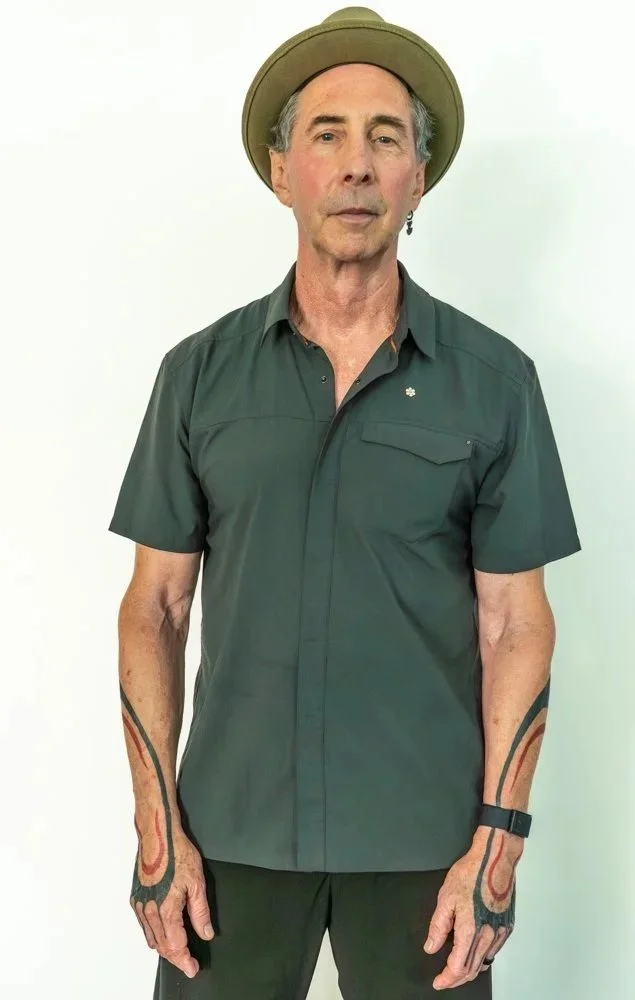
The sound that felt good: The life and music of Mike Stevens
Mike Stevens was just six or seven years old when he discovered something that would shape the rest of his life. He found a harmonica in his home, picked it up, and made a sound. It wasn’t structured. It wasn’t melodic. But it felt good.
“I didn’t know anything about music,” he says, reflecting. “It wasn’t about making music. It was that it felt really good. So that was the beginning.”
And what a beginning it was. That small, satisfying moment sparked a journey that would stretch across more than fifty years—across countless stages and continents, into the hearts of communities in need, and into the lives of thousands of people.
But even from the start, it was never about where it might lead. “By the time I was 16 or 17,” Mike says, “I was playing harmonica for 12 hours a day. Not for a goal or a career or anything like that. Just because it still felt good.”
That pursuit—simple, intuitive, and rooted in feeling—would remain a constant in his life. Music wasn’t something to master or control; it was something to experience and follow.
As Mike continued developing as a musician, he came to understand that his relationship with sound was unique. Eventually, he realized that everyone didn't process the world the way he did and realized that was because of synesthesia, a neurological condition where the stimulation of one sense involuntarily triggers another. In Mike’s case, sound isn’t just sound—it’s layered, textured, and intensely sensory.
“Everything’s music,” he explains. “The sound of a waterfall, the sound of wind—over grass, over trees—they all have a different pitch to me. It’s all music because that’s how my brain processes it.”
This sensory cross-wiring creates a continuous soundscape that most of us can’t begin to imagine. “I have to turn it off or I wouldn’t be able to be in public,” he says. “It’s involuntary. It’s like a burp. It’s just how I’m wired.”
But when he’s on stage, or deep in a recording session, he can flip the switch and let it all in. “For me, it was always about something bigger that connects,” he says. “And if you’re open to it, it can go through you.”
Mike went professional in his early twenties. And from there, the road opened wide. Over the next 45 years, he would perform more than 300 times at The Grand Ole Opry, tour internationally, and share his music with audiences of every kind. His work earned him recognition and awards from across the cultural and humanitarian landscape: the Meritorious Service Medal, the Queen’s Diamond Jubilee Medal, the YMCA Canada Peace Medal, and the Slaight Music Humanitarian Award from the Canadian Country Music Association, among many others. He was named an Honorary Kentucky Colonel, and between 1990 and 1994, he was awarded Entertainer of the Year by the Central Canadian Bluegrass Awards so consistently that the category was eventually retired in his honour.
But if you were to sit down with Mike Stevens, you likely wouldn’t hear any of that from him directly.
There’s something else that hits you first when you meet him—something quieter and harder to describe. It’s an energy. A kind of groundedness. Mike radiates a calm humility and deep presence. When he speaks with you, he listens in a way that makes you feel seen. Not many people have that gift, but Mike does. It’s that same capacity to connect that makes his music so honest—and his life’s work so profound.
In the year 2000, that connection took on a new direction.
While on a tour visiting Canadian Peacekeepers in Northern Labrador, Mike made a stop in Sheshatshiu, a remote Indigenous community grappling with deep challenges, including youth addiction and gas-sniffing. It was there, on a cold northern day, that his path took an unexpected turn.
“I saw a group of kids, maybe 9 to 17 years old,” he recalls. “They were out in the open, sniffing gasoline. I didn’t know what to do, so I just started talking to them. Then I pulled out my harmonica.”
As he played, the atmosphere began to shift. Faces changed. Some started to smile. That one interaction—quiet and spontaneous—would change the course of Mike’s life.
Out of that moment grew ArtsCan Circle, https://www.artscancircle.ca/ an organization that connects Indigenous youth with professional artists, providing musical instruments and creative mentorship in remote communities across Canada.
“Even before we were officially organized,” he says, “I had brought thousands of musical instruments up to lots of communities.” It was never easy. Financially, emotionally, logistically—it was an uphill battle. But it was necessary.
Though he stepped back somewhat from the pace of his performing career to build ArtsCan Circle, Mike never left music behind. He continues to record and perform when he can, bringing the full force of his synesthetic creativity to every note.
And then, in 2025, something remarkable happened. On April 17, Mike Stevens was appointed an Officer of the Order of Canada, one of the nation’s highest civilian honours. When he got the call, he was told the award was “for his music.”
“I completely fell apart,” he says. “I thought instantly about being a 10-year-old kid trying to make my parents proud.”
It’s a powerful image—this world-class musician, this humanitarian and teacher and creator, still connected to the simple, earnest longing of childhood.
To anyone who has heard his music, met him in person, or witnessed the transformative power of ArtsCan Circle, there is no question: Mike Stevens has done something that matters.
What started as a single sound that “felt good” grew into a life of extraordinary depth and contribution. His harmonica may be small, but through it, Mike has created something enormous—a lifelong symphony of service, sound, and human connection.
And as he continues to play, teach, and advocate, you get the sense that he’s still chasing the same thing that started it all—not a career or a legacy, but a feeling. One t that still, after all these years, feels really goodIdeas, Real Impact.

Eden Broda: The World is Her Stage
When you first see or meet Eden Broda, the first thing you sense is her beauty and energy. She is one of those people who stands out—someone whose presence is felt even before she speaks. Many may recognize her as a theatrical and film actor. She has appeared in the CBC comedy series Workin’ Moms, as well as Season 3 of The Handmaid’s Tale. Hallmark fans will know her as Molly in Mistletoe and Molly, where she played the leading role. Eden has also played the role of Mrs. Wormwood in Matilda and has done voice-over work in Blue's Clues & You! where she was the banjo-playing bunny called Bunny-Jo.
Though her career has carried her far beyond Sarnia, her story begins here. Broda was born in the city and is now based in Calgary, but her roots are firmly grounded in a household alive with art and imagination. Her father, Ron Broda, is a celebrated children’s book illustrator. Her mother, Joanne Webb, is the owner of Keys to Reading, focusing on helping dyslexic and struggling readers. Joanne is currently working on a phonemic awareness children's book that will be using some of Eden's illustrations.
Creativity wasn’t optional in the Broda household—it was the air they breathed. Eden also grew up alongside two siblings, an older sister and a younger brother, who, like her, found their way into the creative arts.
“My siblings and I were homeschooled for the majority of our childhood,” Eden explains. “We grew up very much in that environment.” Yet, she did spend time in traditional school settings. She fondly recalls her kindergarten days and shares with a laugh one of her early report cards: “For Eden, the world is a stage and everyone else is just supporting cast.” Looking at her path, that teacher may have captured her essence in a single sentence.
Her school years, however, weren’t always easy. Eden attended St. Christopher High School, where she faced bullying. But instead of dimming her light, the experience sharpened her sense of identity. “I could see how my personality or confidence from an early age might have been intimidating,” she reflects. “But I always had this strong sense that I like who I am—and it’s not my fault. This is a ‘them’ thing. That period helped me develop not just a tougher skin, but also an awareness of different kinds of people. Later, when I faced rejection in the acting world, it just rolled off my back.”
After high school, Eden pursued her passion more formally. She attended the University of Windsor, where she earned a Bachelor of Fine Arts degree in Acting. Her training didn’t stop there—she immersed herself in improv, sketch comedy, comedic writing, and stand-up at Toronto’s RealSpace Theatre. She also studied at the Stratford Shakespeare School, a program known for its conservatory-style training in classical Shakespeare. This combination of formal education and practical training shaped her into a versatile performer.
While she has worked across theatre, film, and television, Eden’s heart belongs to the stage. “Theatre is my favourite,” she says without hesitation. “It’s so hard to get into, but once you’re in, it’s about the process from start to finish. It’s a marathon. I love the personal process, the growth, and especially the live connection. Nothing compares to it.”
Despite her passion, the industry comes with challenges. Eden points out that Canadian entertainment tends to play it safe: “Canada sticks with what works. They don’t deviate much—it’s the same scripts and stories.”
During the pandemic, she admits she became frustrated with the landscape of Canadian film and theatre and how "gate-keepy" and exclusive it had become. "Less about talent and more about how many boxes you tick. For about six months to a year, I was bitter about it. But eventually, I realized maybe I needed a new perspective.”
That realization pushed her to create her own work. She began writing a play for her friends and also started working on a novel. “I found that same creative excitement in seeing my own ideas come to life. It scratched the itch in a different way.”
Her life, however, is not limited to acting. Eden describes herself as someone who “wears many hats.” She works as a professional nanny—something that feels natural to her. “I love kids. I’m a big kid myself. Whether it’s being a camp counselor, a nanny, or even working as a mermaid entertainer, being around children gives me the chance to play.” Both being a nanny and aquatic works leaves her the flexibility to pursue her acting and creative passions.
In addition, she hosts speed dating events in the evenings, which she says keeps her socially connected. And she is actively working toward becoming a certified personal trainer. “I’m really into health and wellness. As a kid, I was in and out of the hospital. I was sick a lot. But for the past eight years, fitness has been a constant in my life. I thought, If I enjoy this so much, why not help others too?”
Eden also reflects warmly on Sarnia’s creative opportunities. “There’s a strong artistic community here, especially for kids. When I was younger, there were so many ensemble shows where kids could just get in there and try it out. I feel like there were more opportunities for me as a child than in high school, which is why I started looking into Shakespeare intensives and other avenues.”
Her ambitions have taken her to the doorstep of some of the world’s most prestigious schools. She auditioned for The Juilliard School, the Oxford School of Drama, and The Royal Conservatory School in the U.K., reaching the final round each time. “Oxford picked eight students, and the Conservatory picked twelve—I was ninth and thirteenth,” she laughs. “If I ever wrote a biography, I’d probably call it Almost.” Even so, her dream of studying and working in the U.K. remains alive.
When asked about fame, Eden is clear: “I don’t want to be famous by any stretch. If I was ever known for theatre, that would be amazing. But really, I just want to do projects that excite me, with great directors and collaborators. I thrive when there’s a group of people brainstorming together, feeding off each other’s ideas.”
Her answer to what acting does for her offers a window into her soul: “I’m an actor until the day I die, whether I’m on stage, on screen, or just in life. The training and the journey have given me so much beyond acting. It’s taught me people skills, how to think on my feet, confidence, and the ability to create chemistry with even the most unlikely people. That, to me, is more than enough.”
Throughout her life and career, Eden has carried with her not just the technical skills of an actor, but the resilience, awareness, and creative fire that were born in Sarnia and shaped by her journey. She is one of those rare people who stands out—not only for her talent but for her authenticity, warmth, and spirit, proving that artistry is not about fame or recognition, but about passion, growth, and connection.
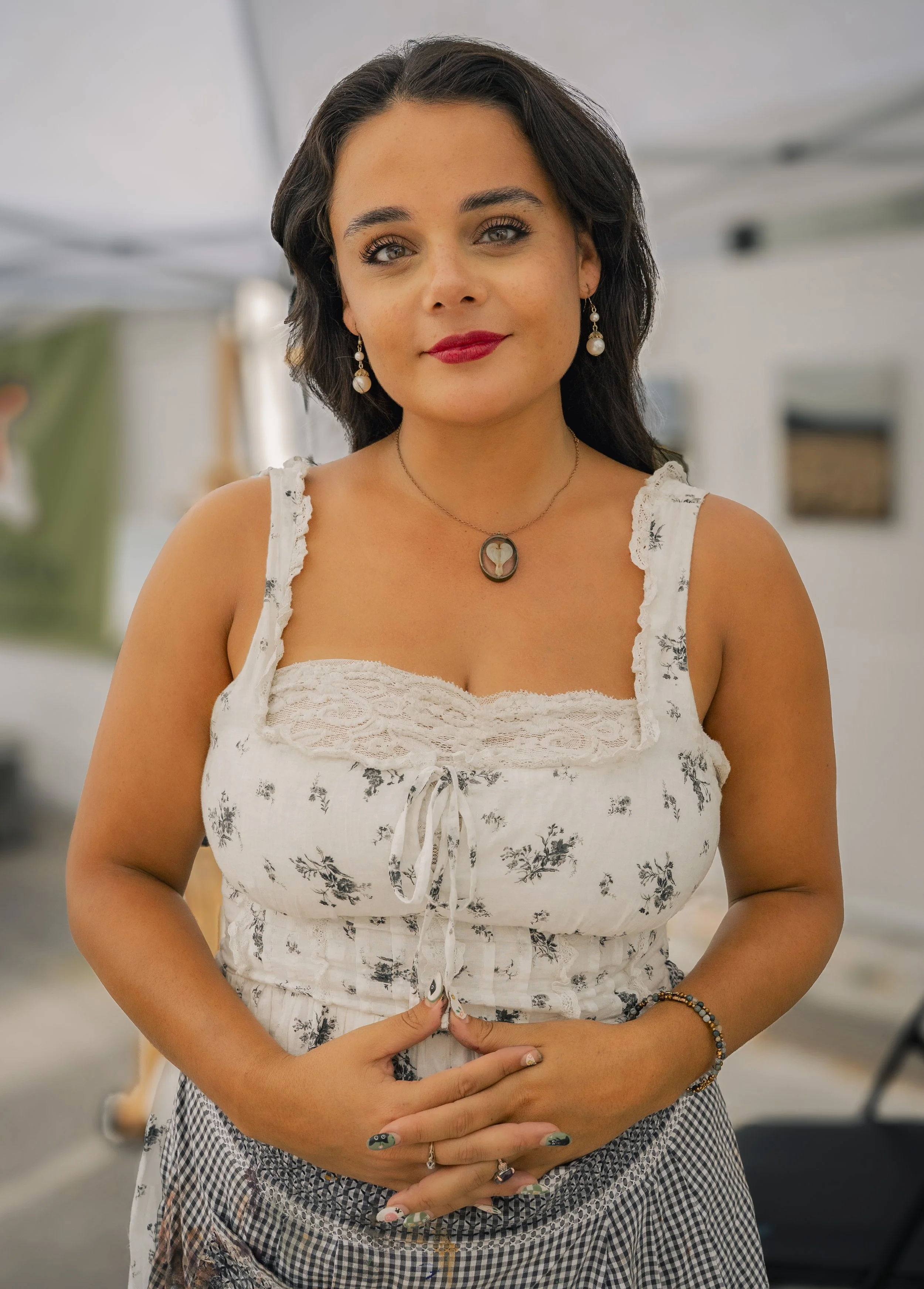
When you first meet Ciara Roebuck, what strikes you most is her calm presence—thoughtful, steady, and warm. She carries herself in a way that feels both grounded and creative, as though her art is not just something she does but something that lives in her. For her, creativity has always been there, tucked into the corners of childhood books and expressed through sketches of the natural world.
Ciara was born in Sarnia, but her father’s career as an ironworker meant that her family’s roots spread across different cities over the years. Moving could have made things feel unsettled, but her family—her parents and two sisters—remained her anchor. “We’ve always been a close-knit family,” she says. “Those who have branched away from the family inevitably find themselves coming back. We do spend a lot of time together.” That closeness has shaped Ciara’s sense of identity: no matter where she goes, family is home.
Her love of drawing began early. “I’m a huge animal person. I would have all the animals in the world if I could,” she laughs. “When I was little, I started with nature books. At first, I would trace the animals I liked. Then I tried replicating them without tracing. That’s how it started.” What began as a pastime grew into something bigger—a quiet companion that stayed with her through every stage of her life.
For many years, art was something she did for herself, a hobby that ran alongside school and work. It wasn’t until the Covid pandemic that Ciara truly began to see her art differently. “Like a lot of people, I suddenly had more time on my hands,” she explains. “I decided to focus on my paintings.” She remembers one piece in particular—a painting of her cat, capturing the intensity of his eyes—that she shared online. The response surprised her. “So many people liked it. Then people started reaching out, asking if I could paint their pets. That was the start of doing pet portraits, which eventually grew into painting portraits of people as well.”
As commissions began to trickle in, Ciara realized her art wasn’t just personal anymore. It was something that connected her to others. “When people trust you to paint their loved ones, whether it’s a pet or a person, it’s special. You’re creating something meaningful for them. It’s a responsibility, but it’s also a privilege.”
Ciara is a proud Anishinaabe artist, and her heritage is something she carries with her in her creative process. With a background in Art History, she specializes in acrylic realism paintings, often focusing on the human form. She explains that her work is shaped not just by the natural world, but also by her own lived experiences—the emotions, challenges, and moments of beauty that make up her life. Her paintings reflect both precision and vulnerability, merging technique with heart.
Interestingly, Ciara’s journey into art wasn’t a straight path. At one point, she thought she would pursue a career in makeup artistry for theatre and film. She attended the CMU School of Makeup Art & Design in Toronto, drawn to the idea of blending creativity with performance. But her curiosity for learning pushed her further. She went on to study art history, first in London, Ontario, and later in Vancouver. “Vancouver was amazing. Everything was beautiful and inspiring,” she recalls. “There was so much energy. I loved it there.”
Yet, despite how much she thrived in Vancouver, the reality of living in one of Canada’s most expensive cities as a student became overwhelming. “It was just too expensive when I couldn’t work full time,” she admits. Eventually, she made the difficult decision to return to Sarnia. Coming back wasn’t just a homecoming, though—it was a turning point. “That’s when I decided to take my art more seriously,” she says.
Now, Ciara views her artistic journey as one of constant growth. She doesn’t see herself as having “arrived” at a final destination, but rather as someone in a lifelong process of learning. “I’m constantly learning. It’s not something where you have this one set of skills and you’re done,” she says. “I think it’s always something that’s going to keep growing.”
Her words reflect a humility that pairs naturally with her talent. For Ciara, art isn’t about perfection. It’s about evolution. Each canvas is a chance to practice, to explore, to reflect. And each finished painting is more than just an image—it’s a piece of her journey, shared with others.
In a way, her story mirrors her art: layers building on top of one another, mistakes turning into discoveries, and each stroke shaping what comes next. Whether it’s capturing the spark in an animal’s eyes, the lines of a human face, or the emotions that linger between moments, Ciara’s work is grounded in connection.
For someone who once thought she’d find her place behind the scenes of theatre productions, she has instead carved out a space where her art is front and center. And like her family—always returning to each other, always finding strength in closeness—Ciara’s art is something she can always return to. It’s her anchor, her expression, and her gift to share with the world.
Spending time with Ciara, you can’t help but admire her openness and sincerity. She is the kind of person who speaks with quiet honesty, who reflects deeply on her experiences, and who is unafraid to admit that growth takes time. Her paintings may capture the likeness of her subjects, but her true gift is the way she captures their spirit. Sarnia is lucky to have an artist like Ciara Roebuck —someone whose talent is matched only by her kindness and her determination to keep growing.
You can learn more about Ciara and her work by visiting her website at https://www.ciararayart.ca/.
Ciara Roebuck’s journey: Family, art, and finding her way home
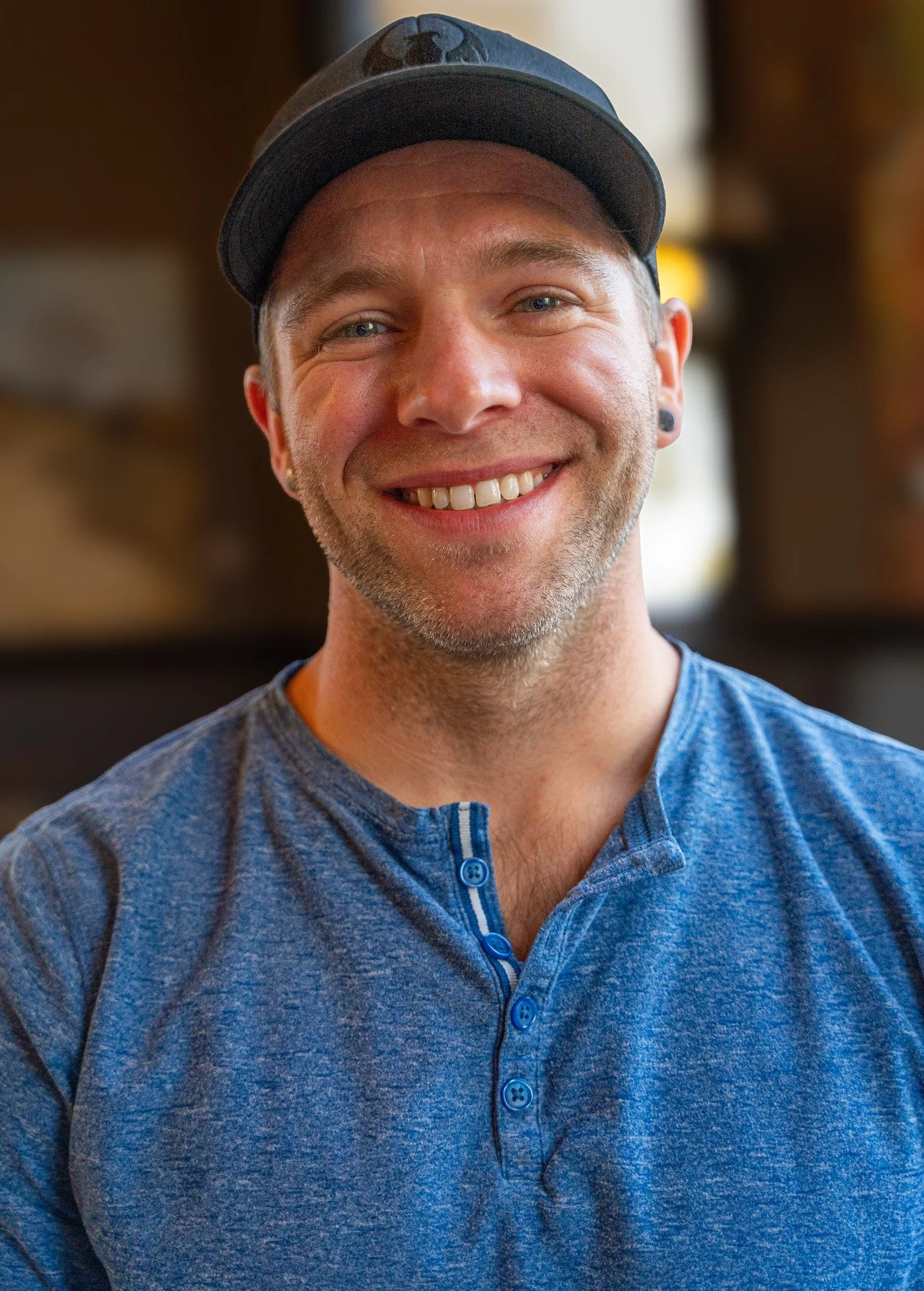
Exploring life’s challenges: A conversation with Daniel Tye
There’s something undeniably compelling about meeting someone who, despite life’s challenges and setbacks, keeps pushing themselves to grow, learn, and give back. Daniel Tye, a Sarnia native with roots in the community of Pt. Edward, is one of those people.
Born and raised here, Tye’s story isn’t one of constant discipline or an unbroken path. In fact, he readily admits he wasn’t the most disciplined student in high school. After attending Bridgeview Public School and later SCITS, he says he wasn’t entirely focused on academics. But it’s precisely this self-awareness and willingness to look at his own growth that gives depth to Tye’s character. His honesty about his own journey is refreshing, and it’s perhaps one reason why he’s such an engaging person to talk to.
Now a certified IRATA (Industrial Rope Access Trade Association) Rope Technician, Tye performs non-destructive testing in the plants around Sarnia—a highly specialized and physically demanding job that’s perfectly suited to his inclination for challenge and hands-on work. His work requires him to maneuver in high places with complete control, and safety is always a priority. For someone who has embraced personal growth, the attention to detail and discipline demanded by his role is a big part of his development.
But work isn’t all there is to Tye. Far from it. When he’s not working in the plants, he’s often found with his guitar, performing as a talented acoustic guitarist. Music, for Tye, has become an outlet for expression, a way to channel his thoughts and emotions into something he can share with others. “Being able to play, to create something, it’s something that feels incredibly personal and meaningful.” Over time, he’s built a bit of a reputation in Sarnia’s music circles, performing at local venues and sharing his love for the craft with audiences who connect with his down-to-earth approach and sincerity on stage.
In fact, this sense of connection extends well beyond the music scene. About eight months ago, Tye took on a new role in his life: that of a Big Brother in Sarnia’s Big Brother program. Mentoring his nine-year-old “little brother,” he’s discovered a new type of joy. When Tye talks about his involvement in the program, there’s a warmth and satisfaction that’s hard to miss. His commitment to helping others speaks volumes about his character and his journey of self-discovery.
Beyond his work and community service, Tye is an athlete with a passion for physical fitness. He regularly challenges himself through CrossFit, attending Phoenix CrossFit here in Sarnia up to six times a week. It’s no small feat, and the discipline required keeps him grounded. His dedication to fitness isn’t just about physical health; it’s part of a larger mindset that he’s cultivated, one that thrives on resilience and constant improvement.
So, when Tye’s friend mentioned the Salkantay Trek to Machu Picchu, it was no surprise that he’d consider it a personal challenge worth taking on. “The world is big, beautiful, and life is short,” he tells me. “I want to prove to myself that I can do this, that I can handle it.” The Salkantay Trek, an 80-kilometer journey through Peru’s diverse landscapes, is far from a casual hike. Rated as one of the “25 Best Treks in the World” by National Geographic Adventure, it’s known for its demanding routes, high altitudes, and breathtaking views. The journey connects the town of Mollepata in Cusco with Machu Picchu, passing through lowland jungle, high-mountain glaciers, and traditional Peruvian landscapes.
For Tye, it’s not only a physical challenge but a deeply personal one. He’ll be traversing high altitudes, reaching 4,630 meters (15,190 feet) at the trek’s highest point. “I’ll have to spend a couple of days just acclimatizing to the elevation,” he explains. He’s set to leave on November 14th and will return by the 25th, just as the rainy season begins in the region. “If the rains come early, I could be in for some rough weather,” he says, laughing slightly. “But that’s part of the adventure, right?”
In preparation, Tye is sticking to his usual workout routine but recently added a unique endurance test to the mix. On October 19th, he and two friends from his CrossFit gym completed a 21-kilometer Spartan race at Blue Mountain. “It was grueling and so challenging,” he recalls. He managed to finish the race in just over four hours—a remarkable feat that tested his strength, resilience, and mental toughness. “
Tye’s experience with mountain landscapes isn’t entirely new; he’s spent time in Colorado with family, exploring the rugged terrain. Those earlier experiences have helped shape his appreciation for the mountains, and he says they’ve instilled a sense of respect for the challenges that come with them.
When asked what drove him to accept the challenge of the Salkantay Trek, Tye’s answer is introspective. “As a kid, I was afraid of everything,” he admits. “But as I’ve grown, I’ve found confidence. I think this trek is a way to prove to myself that I’m capable, that I can handle whatever life throws at me.” It’s clear that this journey is about more than just seeing Machu Picchu. For Tye, it’s an opportunity to reflect, to push his boundaries, and to gain a greater sense of self-awareness.
This trip, however, is just another step in Tye’s ongoing journey of self-improvement. With each new challenge—whether it’s mentoring his little brother, tackling grueling races, or honing his craft as a musician—he’s showing himself and those around him that growth is a lifelong pursuit.
Tye’s story is a reminder that life’s journey is rarely a straight line. It’s full of twists, setbacks, and unexpected turns. But through it all, his spirit of resilience, self-awareness, and dedication shines. As he embarks on his latest adventure to the heights of Peru, he carries with him the support and admiration of a community that’s watched him grow, face challenges, and give back. And when he returns, he’ll have more than memories; he’ll have the satisfaction of knowing he met his goal, pushed his limits, and came back with a deeper understanding of both him and the world around him.
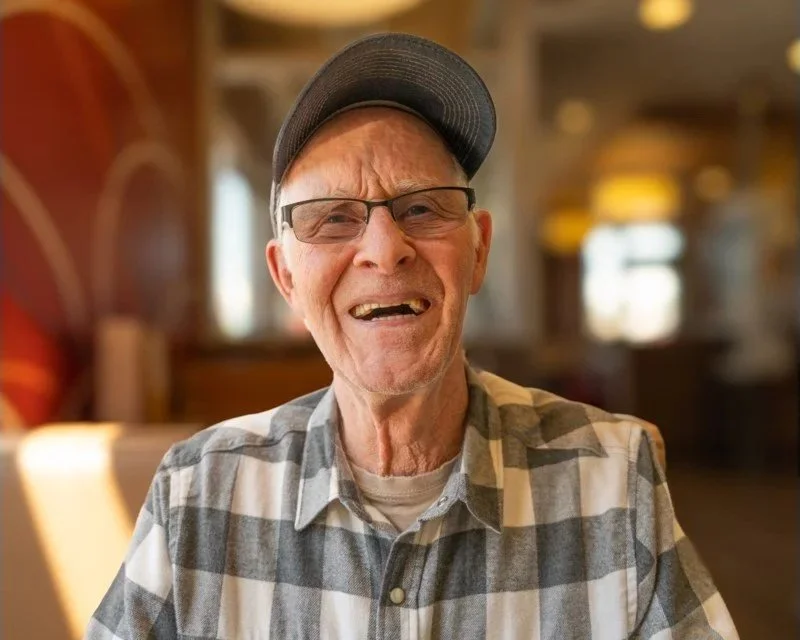
I had the pleasure of sitting down for coffee with 83 year old Dave Woods, a familiar figure under the Bluewater Bridge in Pt. Edward, where he often entertains those passing by with his accordion.
Dave is originally from Midland, Ontario, and comes from a large farm family with seven boys and two girls, all musically inclined. He moved to Sarnia in 1960, following his brother, and began working for his uncle, a builder. Eventually, he joined Union Local 663 Plumber, Pipefitter and Welder, working in maintenance and construction until his retirement in 2001 at 61.
In 1963, Dave married Julia, and they had two sons and one daughter. He proudly shares that he has 13 grandchildren and 9 great-grandchildren.
In 1978, Dave, Julia, and their children moved to Moonbeam, near Kapuskasing, where he worked in a paper mill and lived on a 240-acre property with two lakes. After eight years, they returned to Sarnia.
At 18, Dave bought a used accordion in Toronto, and later purchased the one he uses today which is now over 70 years old. He also plays the guitar and, though he can't read music, he plays by ear. His favorite genre of music to play is gospel music.
Dave began playing the accordion publicly after Julia passed away in 2019, using it as a way to cope with his grief and connect with others. Initially shy, he soon found encouragement from those who enjoyed his music. In the summer of 2019, he only missed six days of playing. Now, he visits the river two or three times a week to share his music and socialize. He often plays his accordion at Julia’s graveside.
In September 2023, Dave moved into a new apartment after selling his home of 29 years. He enjoys the apartment's lower maintenance, allowing more time for bike riding and social activities such as meeting with "the boys" once a week for coffee.
As we sat in the restaurant, it was easy to see that Dave is well-known and respected. People would stop at the table to say hello, and he had a warm smile and greeting for everyone. He listens intently and takes a genuine interest in what you have to say when you converse with Dave . During our conversation, he received several texts and phone calls from his children, highlighting his close relationship with his family.
Dave Woods exemplifies how to embrace and enjoy retirement, finding joy and community through his music and connections.

Janka Liska — The Freshwater Mermaid
“I love that my kids grew up and I stayed!” Janka Liska tells me with a laugh, sunlight catching the sparkle in her eye. That playful energy—equal parts joy, strength, and wonder—is what has earned her the nickname “Janka the Freshwater Mermaid.” And once you’ve met her, it just fits.
Janka was born and raised right here in Sarnia, the daughter of Slovak immigrants. She and her two siblings—an older brother and sister—are first-generation Canadians. “I went to St. Benedict’s for elementary, then Northern for high school,” she says, recalling her roots with fondness. For the past sixteen years, she’s worked at Canada Post, and she’s also a proud mom to two teenage daughters.
But behind the uniform and daily routines is a woman who swims with a tail and brings a bit of magic to the shores of Lake Huron.
“I’ve always been a water person,” Janka explains. “My dad had sailboats at the yacht club, so we were always around the water. I loved swimming—and I’ve always loved mermaids.”
Years ago, when her daughters were small, she bought them mermaid tails to play in the water. Then she discovered that they made adult tails too. “So, I got one for myself,” she grins. “And then my kids grew up and stopped doing it—but I didn’t!”
What started as a playful hobby quickly turned into something more. Janka began filming underwater videos and snapping mermaid selfies, sharing them on social media just for fun. “I like to spread positivity and joy,” she says. “I didn’t plan for any of this to grow—but now I have 8,000 followers on Facebook! I don’t even know how that happened. I just post pics and videos.”
Before settling back in Sarnia, Janka spent two years in the Caribbean, working on the beach renting chairs and umbrellas. “But this is home,” she says, speaking warmly about her return to the blue waters of Lake Huron.
For the past six summers, she’s been a fixture in the local waters, tail and all. In the winter, she practices in indoor pools, often filming her dives with a GoPro. “It’s harder than people think,” she says. “It takes a lot of breath, and a lot of strength. But I love it. It makes me feel like I’m the most powerful woman in the world. It makes me feel pretty. It makes me feel strong.”
She doesn’t just swim for herself, though. Every year, Janka appears as a mermaid at an event at the riding club, swimming with the kids and bringing the magic to life. She’s also the organizer behind Witches in the Bay, a whimsical event where paddleboarders and kayakers, dressed in witch costumes, gather at Centennial Park. The event is not just about fun—participants also donate to a local charity.
Whether she’s diving under waves or organizing paddle parades, Janka brings something special to Sarnia: the reminder that you’re never too old to believe in magic—or to be it.
“I think it’s important to stay connected to joy,” she says, pausing for a moment, as if letting the thought settle. “And maybe inspire others to find theirs too.”
With her bright smile, infectious laugh, and unmistakable tail, Janka Liska swims through life as only a true Freshwater Mermaid can—on her own wave, and always with heart.
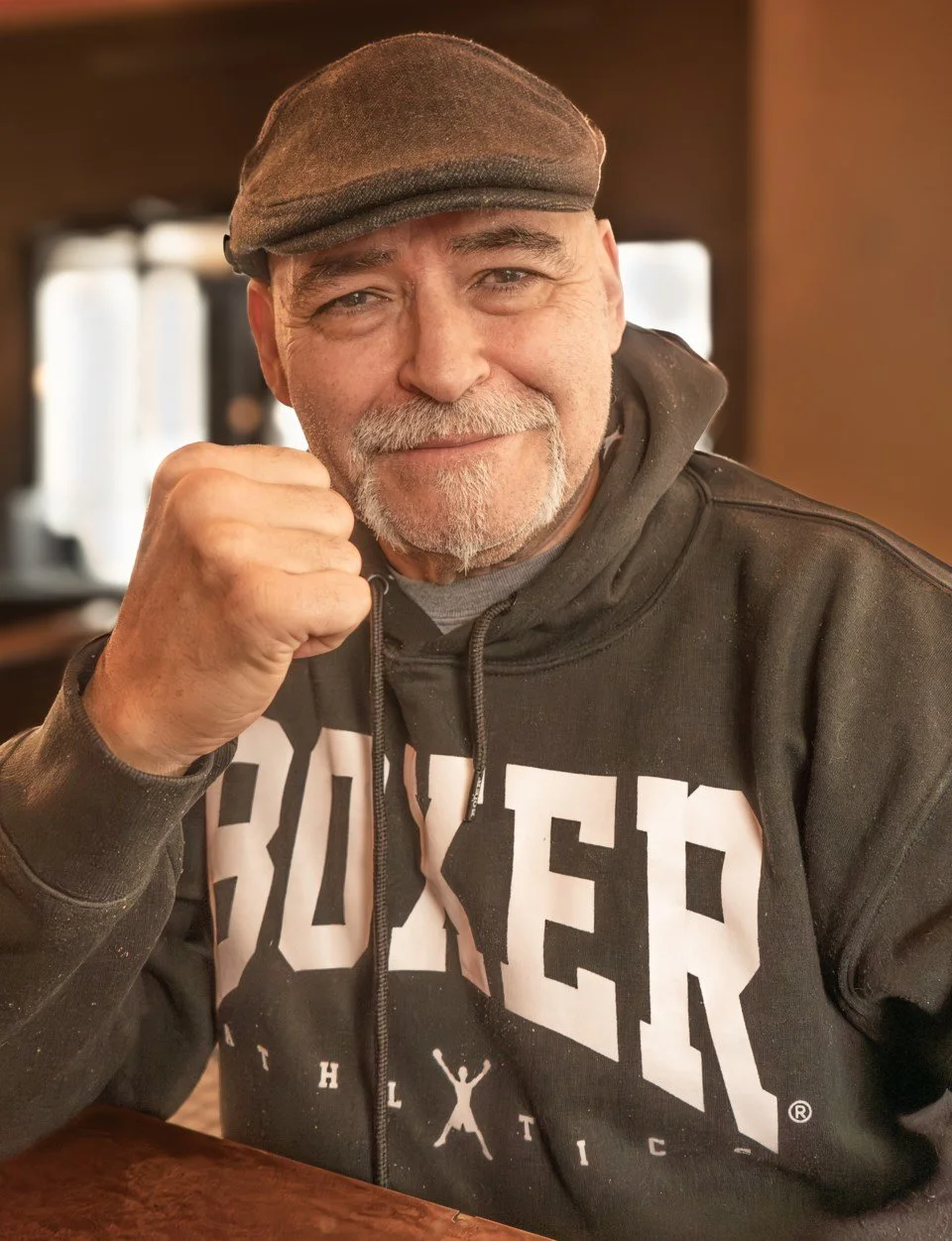
Rich in Memories: The Journey Home of Rob Pelletier
Rob Pelletier’s story begins on Manitoulin Island, but it is in Sarnia where his identity first took shape. He was raised in a family deeply connected to the rise of what became known as “Chemical Valley.” His father spent long days working as a heavy equipment operator, helping to build the industrial backbone of the region, while his mother contributed in her own way through community involvement with the Sarnia Legion and the Catholic Women’s League. Reflecting on those early years, Rob says, “That’s what I saw growing up—hard work and giving back. It was just normal.”
At St. Patrick’s High School, Rob found his place—not in the classroom, he admits with a grin, but on the field and the court. Athletics became his language. Whether it was basketball, football, or any other competitive sport, he was fully committed. “I was well known,” he says. “Not for academics… for sports.” There is no regret in his voice—only a quiet pride. He was an all-star basketball player, recognized as one of the best in Ontario at the time. Even then, another path was already beginning to take shape.
At the age of ten, Rob stepped into martial arts, and he never really stepped away. “I think the secret is I never stopped,” he says. “I just forgot about getting old.” That steady, disciplined mindset carried him into boxing as a young teenager at the St. Clair Athletic Club. By his early twenties, like many others searching for something more, he left Sarnia. “That’s when the journey began,” he recalls.
Toronto offered opportunity, but also a shift in direction. A government job provided stability, though it meant stepping away from competitive boxing. Still, the structure and discipline of the sport remained a constant in his life, eventually leading him into coaching. In the early 1980s, his path took a significant turn when members of the community approached him to develop a practical self-defense program for women. What began as a response to a need quickly grew into something much larger. “I got so busy,” he says. “Corporations, colleges, universities, high schools—it just got nuts.”
As the program expanded, media attention followed, and Rob became a recognizable figure in Toronto’s fitness and self-defense community. “I was featured everywhere—television, newspapers… I became a media darling,” he says with a laugh. But beyond the attention, the true impact of his work was reflected in the numbers—more than 145,000 women and children participated in his workshops. To meet demand, he trained and certified instructors across the region. For Rob, it was never about recognition; it was about making a difference.
That same commitment carried into his involvement with Muay Thai, where he played an instrumental role in helping to legitimize and sanction the sport at the provincial level. As a referee, judge, and coach, he remained connected to every aspect of it. Then, after 45 years away, Rob returned to Lambton County. Being closer to family mattered, but he admits there was something missing. “There was a void,” he says.
It didn’t take long before people began seeking him out again for guidance, training, and mentorship. While opportunities arose outside the city, Rob made a decision that aligned with his values. “If I was going to do it, it had to be here.” His gym in Sarnia reflects that intention. It is not defined by size or appearance, but by purpose. “It’s not the biggest, and it’s not the smallest—but it’s unique,” he says. “There was a need to share what I know—and a need for me to keep sharing it.”
That exchange—teaching and learning, giving and receiving—continues to guide him. He speaks thoughtfully about the challenges facing younger generations, particularly their search for belonging. “They look for acceptance in places that don’t always give it back,” he explains. Drawing on his experience working with diverse communities, including First Nations, he emphasizes the importance of guidance and structure. “It always comes back to the same thing—the martial arts way.”
For Rob, access is essential. He has seen how cost can become a barrier and believes it should not prevent young people from participating. “There are ways to make it work,” he says. “If a kid wants to be here, we find a way. But there are rules—they stay in school, they stay out of trouble. This is about building something better.”
Rob now proudly runs Iron Eagle Gym which offers numerous programs such as boxing, Muay Thai, Self Defense, MMA, Krav Maga and Youth Training.
To learn more visit https://ironeaglegyms.com
There is no grand conclusion to his story, no attempt to neatly summarize a life shaped by decades of experience. Instead, Rob offers something quieter and more personal. “I don’t really pat myself on the back anymore,” he says. “Memories… those are my trophies.” Sitting there, calm and grounded, it is clear he means it. “When my time comes,” he adds, “I’ll go rich—with memories.”

Blair Anderson: The nurse on a mission to bring healthcare home.
I met Blair Anderson on a bright fall morning in Sarnia. Blair, a Registered Practical Nurse (RPN), welcomed me with a warm smile. I quickly realized that her journey from being a Developmental Service Worker (DSW) to becoming an entrepreneur was driven by compassion and resilience.
Blair Anderson’s roots in Lambton County run deep. Born and raised in Sombra, a small riverside community, she now lives in Mooretown. Blair always knew she wanted a career that involved helping others.
After graduating from SCITS, she attended St. Clair College, where she earned her DSW diploma. Her first job after graduation was as a resource teacher with a children’s health centre working within the First Nations community.
Despite her fulfillment in working with children with exceptionalities, Blair felt a calling to return to school. Juggling her job, she went back to pursue her RPN designation. The transition into nursing seemed like a natural evolution of her desire to help others.
Soon, Blair found herself working as a nurse at a local hospital, rotating between the Emergency Room and Mental Health and Addictions departments. She transitioned into long-term care before returning to her pediatric roots to start On the Go Nurse.
In 2017, Blair’s life was turned upside down. In one week, her father passed away after a battle with ALS, her brother got married, and she graduated with her RPN designation. "It was one of the most emotionally intense weeks of my life," Blair said softly.
Losing her father and watching her mother navigate the system opened her eyes to how much is asked of caregivers. "There were so many things my mother had to manage. It was like she had a full-time job as a caregiver," Blair explained.
That experience made her realize there are significant gaps in our healthcare system. Those observations sparked the initial idea for On the Go Nurse. She saw firsthand that families needed more support on the ground.
Launched to serve the communities of Sarnia, Lambton, and Kent Counties, On the Go Nurse brings healthcare to the doorstep. The business offers routine care like ear irrigation and foot care, alongside specialized services like wound care and caregiver respite.
Blair’s business fills a crucial gap in the local healthcare system. "There are so many people who can’t get in to see a doctor for weeks, but they need medical attention sooner than that," she explained. "Sometimes, they just aren’t physically able to get to a doctor’s office."
Caregiver burnout is a significant focus of her work. "There are so many families where one person takes on all the responsibility, and it’s just overwhelming. I can come in and provide that respite care, giving caregivers a chance to rest and recharge."
Blair also takes the time to walk her patients through the complex world of healthcare benefits. She helps them understand what services are covered, especially regarding foot care or respite services. Her experience in the medical field ensures they receive maximum support.
Blair’s entrepreneurial venture is driven by a deeply rooted passion for people. "I’ve always loved working with people," she said with a grin. "I think that’s why I have a 90% re-booking rate. My patients trust me to look out for their well-being."
Her extroverted and approachable nature makes it easy to see why her patients are so loyal. Throughout our chat, her enthusiasm for her work was infectious. She treats every patient as a person rather than a checklist.
Blair recounted one instance where a simple conversation led to a crucial discovery. During a routine visit, a patient mentioned unusual symptoms they were experiencing. It turned out to be something serious, and she was able to get them help before things worsened.
In a world where access to healthcare is increasingly strained, On the Go Nurse provides a service to those who might otherwise fall through the cracks. "There’s a real need for this kind of care," Blair explained. Mobility and transportation problems often prevent people from seeking help.
Her service is particularly valuable in rural areas, where access to healthcare can be even more limited. Sarnia and the surrounding counties are home to many older adults who might not have family nearby to help them. Blair bridges that physical distance.
As On the Go Nurse grows, Blair plans to expand her services. She is looking into partnering with other healthcare professionals to offer even more comprehensive care. "I’m always thinking about how we can make things better," she said.
Despite growth, Blair’s focus remains on the individuals she serves. On the Go Nurse has become a lifeline for many in Sarnia and the surrounding counties. With Blair at the helm, the mobile nursing service is just getting started.
Blair Anderson is proving that all it takes is a caring heart and a passion for making a difference. For more information visit www.onthegonurse.com.
Humans of Sarnia founder Art Connolly is fuelled by curiosity and a passion for connecting with people. Inspired by the Humans of New York series, he captures the essence of the individuals he encounters, preserving their stories through his lens.
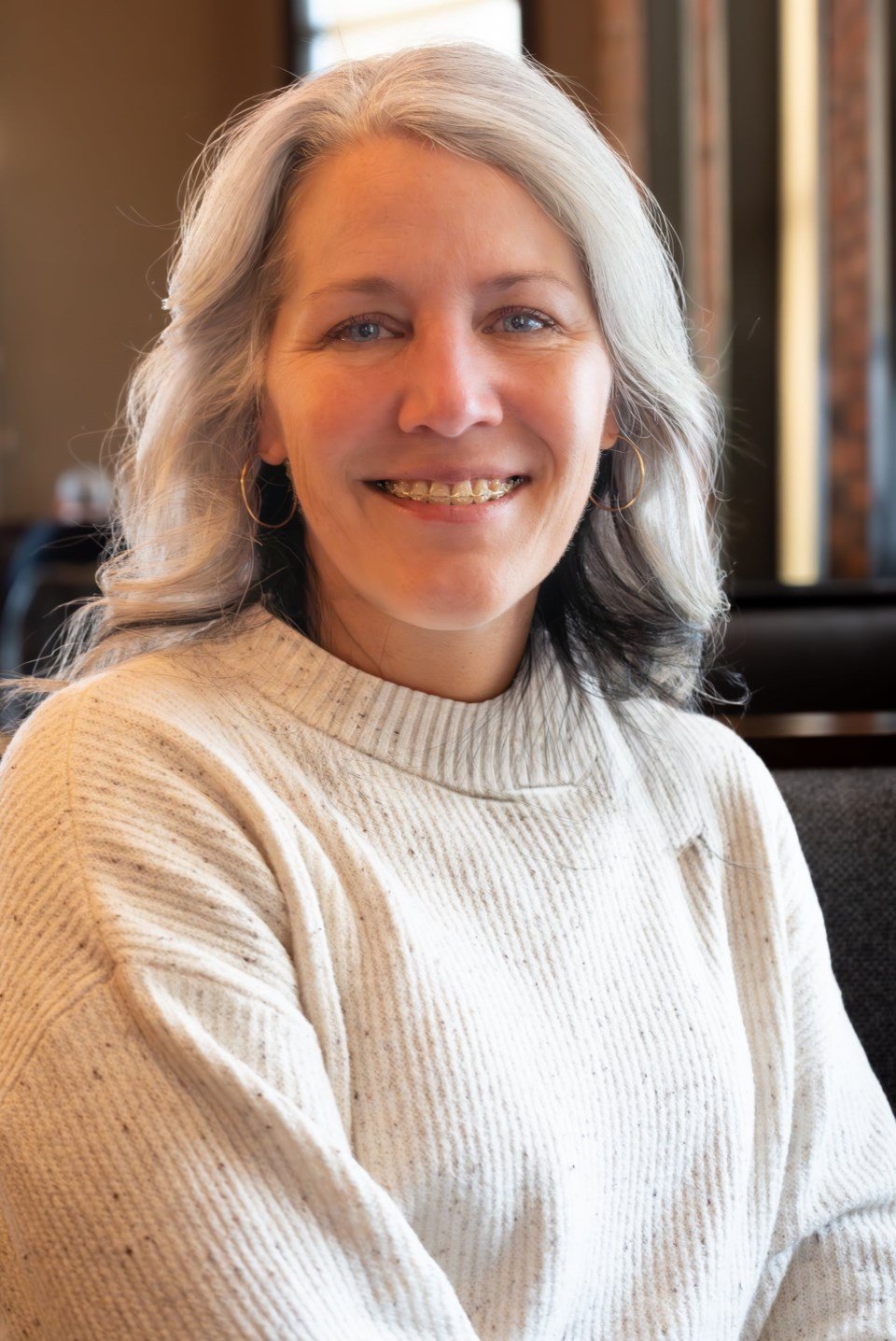
The power of consistency in a changing life
There’s a certain kind of person you meet in a community like Sarnia—someone whose story doesn’t just unfold in chapters, but in quiet acts of consistency, resilience, and care for others. Jennifer Jung is one of those people.
She begins her story in Goderich, where she was raised in a household that redefined what “family” could mean. One of seven children, her upbringing included three adopted siblings of which two were cousins who, in every meaningful way, became brothers and sisters. It was a home shaped less by structure and more by intention—a place where belonging wasn’t assumed, it was actively built.
That early exposure to a blended, expansive definition of family seems to echo through everything Jennifer does today.
She met her first husband in Goderich, and together they built a life in Stratford, where she would spend the next 22 years. During that time, she raised three children, choosing to homeschool them for many of their formative years. It’s a decision that requires patience, discipline, and a kind of emotional attentiveness that doesn’t clock out at the end of the day.
At some point, Jennifer made a decision that would quietly reshape her path—she went back to school.
She earned a diploma in Nutrition through the Canadian Health Association, a move that reflects something deeper than career ambition. It speaks to a mindset: the willingness to evolve, to invest in oneself, even while raising a family and managing the demands of everyday life.
But life, as it often does, shifted.
Her marriage ended right after she completed her schooling, and Jennifer found herself navigating a new reality—balancing the emotional weight of that transition while continuing to support her children and maintain not just one job, but multiple. When she talks about that time, there’s honesty, but also a lightness that seems earned.
Not long after, she stepped into a leadership role as Nutrition Supervisor at Bonnie Brae Health Care Centre in Tavistock Ontario. When the centre relocated to London, Jennifer didn’t step back—she leaned in, commuting from Stratford to London. It’s a detail she doesn’t dwell on, but it says a lot. Commitment, for her, isn’t conditional.
She laughs recalling how her children encouraged her to start dating again.
Jennifer, at the time, couldn’t imagine it. Between work and responsibility, she didn’t feel she had the space—emotionally or practically—to re-enter that world. But persistence has a way of opening doors. She agreed, reluctantly, to what she describes as a “30-day trial” on a dating site.
She met Will on day twenty-nine.
There’s something almost cinematic about that timing, but Jennifer tells it without dramatics. They spoke online for months before meeting in person in August. By December, they were married.
It’s not the speed of the story that stands out—it’s the clarity. Sometimes people recognize alignment when they see it.
Professionally, Jennifer continued to build on her experience. She worked at Trillium Village for a year and a half before moving to Marshall Gowland Manor, where she spent eight years. Her work in long-term care placed her at the intersection of nutrition, dignity, and quality of life—roles that are often under-recognized but deeply impactful.
Then came the pandemic.
Like many in healthcare, Jennifer found herself facing a level of burnout that couldn’t be ignored. “I loved my work up until the last few years,” she explains, “and I think my performance showed.” There’s no blame in her voice—just an awareness that something had changed.
So she made another difficult decision.
She stepped away.
For a year, Jennifer allowed herself the space to reassess. It’s not something everyone feels permitted to do, especially after years of steady employment. But that pause became a turning point.
She had always thought about real estate as something she might pursue later in life. Instead of waiting, she moved toward it.
“I think I’m gonna sign up for the real estate course,” she remembers deciding. That instinct—to act rather than defer—is a defining trait.
She was encouraged by Broker of Record Steve Park at Coldwell Banker Southwest Realty to consider joining the brokerage. Even as she explored other options, she admits she already knew she would land with Coldwell Banker.
Today, her approach to real estate feels less transactional and more relational.
“I love to meet people,” she says. “That is why I do it.”
It’s not just about buying or selling homes—it’s about building trust, understanding people’s lives at transitional moments, and creating connections that last beyond the transaction. For Jennifer, sustainability isn’t a business buzzword—it’s the natural outcome of genuine relationships.
But her impact in Sarnia doesn’t stop at her profession.
Together with her husband Will, Jennifer has woven herself into the fabric of the community in ways that are both visible and quietly profound. Through their church, they are actively involved in youth programming—stepping into a space where consistency and care can make a lasting difference.
“I am a firm believer in helping youth,” she says. “Some need leadership, and some just need old-fashioned loving.”
It’s a simple statement, but it reflects a deep awareness of the challenges young people face today. Rather than standing at a distance, Jennifer and Will chose to step in.
They also contribute to Sarnia Blessings, an initiative focused on supporting seniors who are struggling to access basic necessities like food. It’s the kind of work that often goes unnoticed, but for those receiving it, the impact is immediate and real.
Jennifer speaks openly about feeling blessed—particularly in terms of the resources she and Will have been given. But what stands out is what they do with that perspective. Gratitude, in their case, translates into action.
She’s also a member of her church’s worship team, something she describes with a smile. “It’s like being in a band,” she says. “A lot of singing—and I love it.”
It’s a small window into another side of her life—one that balances responsibility with joy.
When you step back and look at Jennifer’s story, what emerges isn’t just a timeline of events, but a pattern: showing up, adapting, and choosing connection over convenience.
In a city like Sarnia, where community is often defined by the people who invest in it, Jennifer’s presence carries weight. Not in a loud or performative way, but in the steady accumulation of moments—supporting a senior, mentoring a young person, guiding a family through a major life decision.
She is, in many ways, a reflection of what makes a community work.
And in telling her story, you begin to understand that places don’t become stronger on their own.
They become stronger because of people like Jennifer.
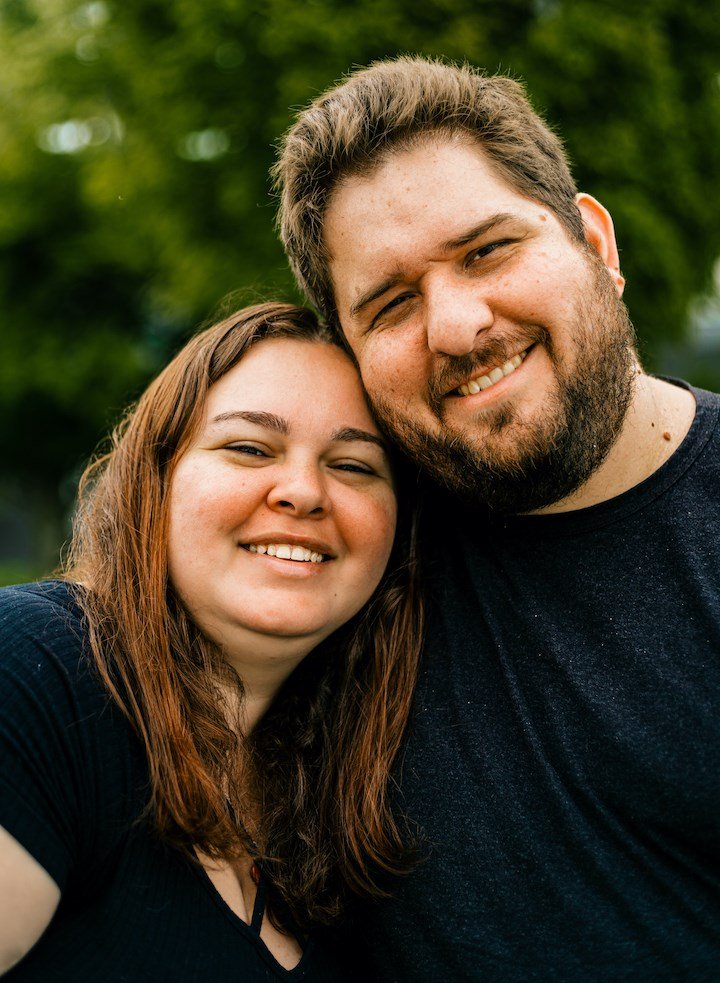
Space to breathe for Aline and Jorge Rocha
From time to time, certain stories deserve to be shared again. This profile of Aline and Jorge Rocha was previously published in Humans of Sarnia, and in revisiting it, we are reminded why they resonated so deeply with readers. As new members continue to join our community—and as conversations around belonging, opportunity, and freedom remain as relevant as ever—we are honoured to reprint Aline and Jorge's story and reintroduce their journey to Sarnia.
There’s a particular kind of quiet that settles over the St. Clair River in late summer—still, almost reflective. It’s the kind of place where people come not just to pause, but to begin again.
That’s where I met Aline and Jorge Rocha.
They sit close together when they speak, often finishing each other’s thoughts, their words shaped by both memory and intention. Just over a year ago, in August of 2022, they arrived in Sarnia from Rio de Janeiro—a city defined by movement, colour, and a population that never quite seems to sleep. Here, they found something different. Not better or worse, they’re careful to say—but different in ways that have changed how they think about life.
Back in Brazil, Aline was a lawyer. Jorge worked as an entrepreneur in the oil and gas supply chain sector. Their lives, on paper, were stable. Educated, established, and deeply rooted in their community. But as they describe it, stability began to feel uncertain in ways that went beyond career or finances.
“It wasn’t just one thing,” Aline explains. “It was everything together.”
They talk about the political climate in Brazil during the presidency of Jair Bolsonaro—a period they experienced not as a distant headline, but as something that filtered into everyday life. Policies shifted. Conversations changed. Trust in institutions, they say, began to erode.
Jorge leans in slightly when he speaks about it, choosing his words with care.
“There was a feeling that things were becoming more divided,” he says. “Not just politically, but socially—even within families.”
They describe a country grappling with rising inflation, increasing poverty, and a widening gap between those who had security and those who didn’t. In Rio, where beauty and hardship exist side by side, the contrast became more pronounced. Crime was not an abstract concern—it was something measured in daily reality.
“In some areas, you hear about violence every day,” Jorge says. “It becomes part of how you think. Where you go. What time you leave your house.”
For Aline, the shift was also cultural. She speaks about cuts to education, science, and the arts—not as policy points, but as losses that affected how people express themselves, how they learn, and how they imagine their future.
“You start to feel like your voice doesn’t matter as much,” she says quietly.
And then there was the economy. A changing industrial landscape meant layoffs. Opportunities became less predictable. For two people who had built careers through education and hard work, the path forward felt increasingly unclear.
“At some point,” Jorge says, “you ask yourself what kind of life you want—not just now, but in ten years.”
That question led them here.
They arrived in Sarnia without a network. No family waiting. No built-in community. Just two suitcases, a shared resolve, and the understanding that starting over would require both humility and patience.
Today, that rebuilding is already underway. Aline is enrolled in the Business Management program at Lambton College, stepping into a new chapter that reflects both her past experience and her future goals. Jorge has taken on a role as a Systems Specialist with a local company, applying his skills in a completely new context.
There’s a noticeable shift in their tone when they talk about Sarnia—not excitement exactly, but something steadier. Relief, perhaps.
“The first thing you notice is the size,” Jorge says, laughing. “Rio has more than 13 million people. Here… it’s very different.”
But it’s in the details where the contrast becomes most meaningful.
They talk about cost of living. About how something as simple as buying a car can represent an entirely different reality. In Rio, they explain, the same vehicle that might cost $5,000 here could be eight times that amount.
“You feel it in your daily life,” Jorge says. “Here, things feel more possible.”
They mention public transportation—something often overlooked by locals—as another unexpected advantage. In Brazil, long commutes were simply part of the routine. Hours lost in transit, every day.
“In Sarnia, everything is close,” Aline says. “You gain time. And time changes how you live.”
Still, the transition hasn’t been without its emotional weight.
They miss their families. That part is immediate, unfiltered. There’s no attempt to soften it.
“We talk all the time,” Aline says. “Video calls, messages… but it’s not the same as being there.”
And yet, they’re building something here.
Friendships are beginning to take shape—slowly, but meaningfully. Aline has found connection through volunteering at her church, a space that offers both familiarity and community. It’s in these smaller, quieter moments that Sarnia begins to feel less like a destination and more like a home in progress.
When I ask what the future looks like, they don’t hesitate.
They plan to stay.
Their goal is to become permanent residents of Canada—not just as a legal status, but as a reflection of something deeper: a commitment to the life they’re creating.
“It’s not just about leaving somewhere,” Jorge says. “It’s about choosing where you want to build.”
In a city like Sarnia, where stories often unfold quietly, Aline and Jorge’s journey feels both deeply personal and widely familiar.
Two people, educated and accomplished, choosing uncertainty over comfort—not because it was easy, but because it offered the possibility of something better.
And in that choice, they’ve found something that can’t be measured in population size or price comparisons.
They’ve found space.
Space to rebuild.
Space to breathe.
And, slowly, space to belong.
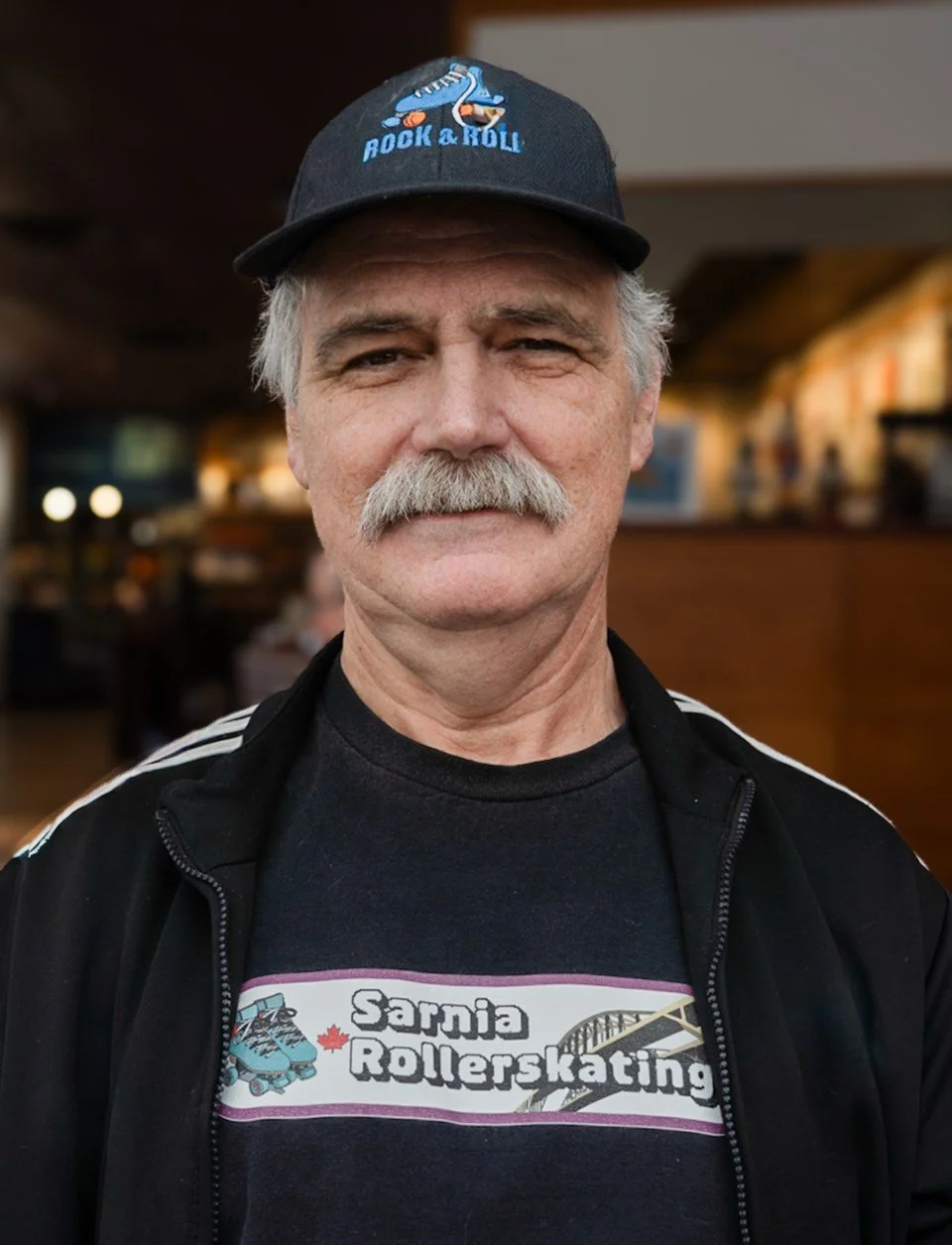
Brad begins his story with a detail that still makes him smile.
He was born in Brantford just one week apart from Wayne Gretzky. “We were probably born in the same hospital,” he says with a laugh. “That’s where the similarities end.”
At eight years old, Brad moved to Sarnia, and aside from brief stretches elsewhere, it has remained home. His career path reflects the steady belief of someone who values work and routine. He spent several years at Dow, moved into sales, and today works at Foodland in Brights Grove. He also serves as a caretaker at a local church. Retirement, for Brad, is more theory than plan. “I don’t know if I’ll ever fully retire,” he says. “I enjoy keeping busy.”
But the real through-line of his life isn’t found in job titles. It’s found on wheels.
During the mid-1970s, while attending Sarnia Collegiate Institute and Technical School, Brad discovered roller skating. What began as something social quickly evolved into something more disciplined. He spent most evenings at Skate Country, circling the floor for hours, refining footwork, learning control and balance.
That was more than five decades ago.
“I’ve been skating about 52 years now,” he says. The number lands softly, almost casually, but it represents a remarkable consistency. When Skate Country eventually closed, Brad faced the same crossroads many niche hobbyists’ encounter: accept the loss or adapt.
He chose to adapt.
He travelled into the United States when he could, made trips to Windsor, and found a rink in London that remains his most reliable option. “London is the only place within a short drive that you can go to on a regular basis,” he explains. The commitment requires planning, fuel, and time — but for Brad, skating has long since transcended convenience.
In the 1970s, roller skating in Canada held a different cultural presence. Rinks were social anchors. Birthday parties, date nights, and weekend gatherings revolved around polished floors and disco lights. Brad remembers it as something woven into youth culture. Today, he notes, the United States still sustains that scale, with large crowds and thriving skating communities. In Canada, interest waned for a time but has recently experienced a revival — fuelled by pandemic-era rediscovery of outdoor and individual activities, nostalgic longing, and the amplifying power of TikTok and Instagram.
Locally, Brad has been quietly working to keep that revival alive.
For the past ten years, he has helped organize public roller-skating sessions at Clearwater Arena during the months when the ice is removed, typically from late April to late August. It is currently the only viable space in the area suitable for roller skating. The sessions draw an eclectic mix: teenagers tentatively learning crossovers, young adults rediscovering something they abandoned after high school, and people in their forties and fifties returning to a rhythm they never quite forgot. “What I really like to see is the young teenagers,” Brad says. “And now I see people my age bringing their grandkids.”
Each session seems to confirm what he already believes: there is an appetite for shared, physical activity that isn’t mediated by screens. Parents tell him regularly that the city needs more opportunities like this — that there isn’t enough for kids to do.
Skating, in its simplicity, offers something rare. It demands presence. You cannot scroll while gliding. You must pay attention to your body, to others on the floor, to the music, to balance. It is social without being performative. It is exercise disguised as joy.
Yet the limitations are structural. Sarnia Roller Skating is limited in how often it can book the arena — typically one or two days per week during the off-ice season. For the remainder of the year, there is no indoor facility locally dedicated to roller skating. The continuity he has maintained personally for 52 years is not easily replicated for the community.
“That’s one reason I’d like to expand what I’m doing,” he explains. “I’d love to find a place so we can do it year-round.”
He has begun exploring vacant commercial properties — warehouses with smooth cement floors, spaces that would require minimal retrofitting. “Ideally an empty warehouse with a nice clean cement floor would be perfect,” he says. “Basically, I’m looking for a place that’s ready to go.”
There are a couple of possibilities, he notes carefully, that could work if circumstances align. But before securing space, he understands that he needs something equally important: a broader base of committed participants.
His next step is organizational rather than architectural. Brad envisions forming a skating club — possibly structured as a co-operative — that would formalize meetups, create programming, and cultivate a stronger skating community. With enough momentum, a dedicated facility could evolve into something multi-generational and multi-purpose: a seniors’ activity centre during certain hours, space for skateboarding, perhaps even pickleball alongside roller skating.
It is an ambitious vision, but it grows organically from five decades of lived experience. Brad is not chasing a trend; he is stewarding a tradition.
In a city often defined by industry and shoreline, Brad’s circles on polished floors might seem small. Yet they represent something enduring: the quiet persistence of joy. While others chase novelty, he has remained faithful to something simple and physical — a practice that has outlasted employers, venues, and cultural cycles.
Fifty-two years after first lacing up skates at Skate Country, Brad is still in motion — not only for himself, but for the next generation waiting at the edge of the floor.
If you are interested in learning more about Sarnia Roller Skating, please visit their website at https://sarniarollerskating.ca/
The Man Keeping Sarnia Rolling
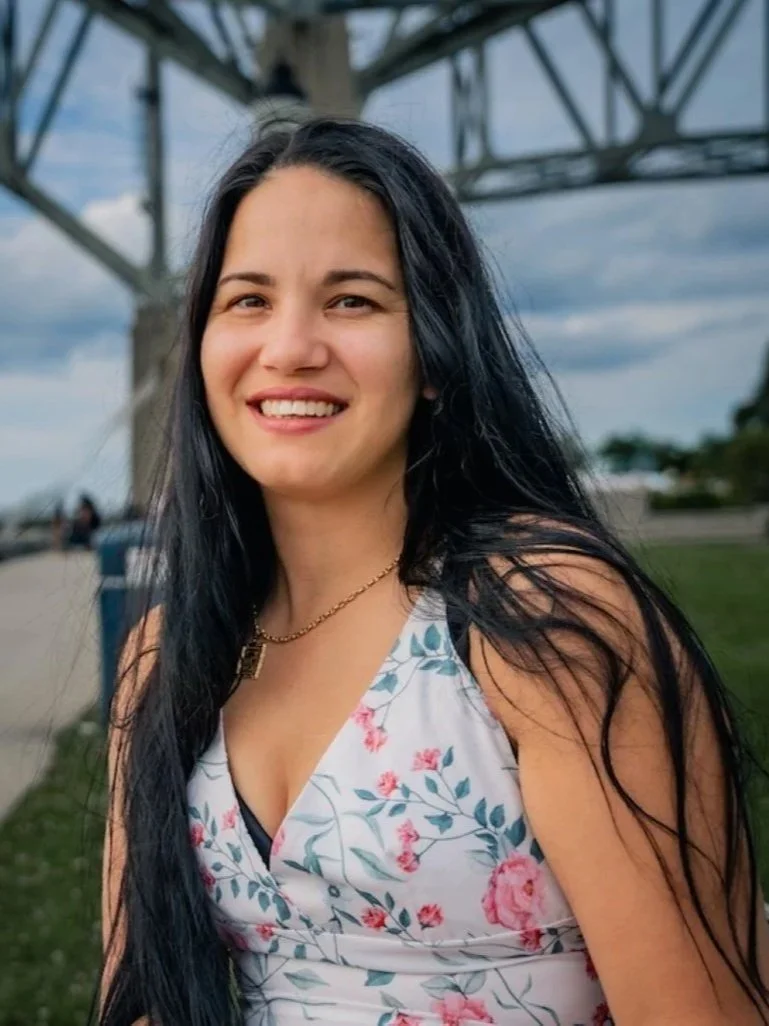
A story of cultural transitions, love, and newfound freedom
When Maitte Martinez laughs, it is full and unguarded—the kind of laugh that tells you she has lived through contrast. She arrived in Sarnia from Camagüey, Cuba, stepping into a community that now feels, in her words, “like the place I was meant to build my future.”Her journey to Canada began nine years earlier, with the birth of her son.
“Becoming a mother changes how you see everything,” she tells me. “You stop thinking only about today. You think about what will be possible ten years from now.” For Maitte, that long view made certain realities impossible to ignore. She loved her country, her culture, and her fam
ily—but she worried about opportunity, about freedom, and about the limitations she felt pressing in from all sides.
In Cuba, Maitte was nothing if not industrious. She worked as a secretary. She pursued photography. She modeled. Three jobs—each requiring skill, energy, and presence. Yet together, they earned her the equivalent of roughly $100 per month.
“You learn to survive,” she says simply. “You learn to be creative.” But survival and possibility are not the same thing.
Maitte speaks candidly about growing up in a political system where ideology permeated daily life. From childhood, she explains, messaging around communism was embedded in school lessons, songs, and stories. “It shapes how you think,” she says. “You don’t even realize how much at first.” She describes it as a kind of conditioning—ideas repeated so often they become unquestioned truths.
Corruption, she says, was widely understood but rarely openly confronted. Propaganda was persistent, passed from one generation to the next. She refers to it as “The Big Lie,” a phrase she uses carefully, not with bitterness, but with reflection. Yet her account is not one-dimensional.
“Cuba is not only negative,” Maitte insists. She speaks warmly about the country’s healthcare system, which she describes as strong and accessible. And more than anything, she highlights the strength of Cuban community life. “People take care of each other. Neighbours are family. If someone has little, they still share.”
It is this duality that defines her story—not rejection, but discernment. She can hold love for her homeland and still acknowledge why she needed to leave.
When she finally arrived in Canada, the transition was both exhilarating and disorienting. One of her first vivid memories is walking into a grocery store.
She laughs as she recalls it. “I stood in the bakery section for so long,” she says. “There were so many cakes.” Layered cakes. Iced cakes. Chocolate, vanilla, fruit-filled. Rows upon rows of choice.
In Cuba, food availability could be uncertain and inconsistent. Meals were often determined not by preference but by what happened to be available that day. Standing in that Canadian grocery aisle, Maitte experienced something deeper than delight—it was abundance made visible. “It felt like another world,” she says.
Today, Maitte works as an optician in Sarnia, a role she embraces with pride. There is symbolism in it, though she doesn’t frame it that way. Helping others see more clearly seems fitting for someone whose own life has been shaped by perspective.
She values her work not only for the income stability it provides but for the sense of contribution. “I like helping people,” she says. “When someone can see better, their whole day is different.” It is in these everyday interactions that Maitte has come to understand Canada not just as a country, but as a culture. She describes Canadians as welcoming, patient, and willing to help newcomers navigate unfamiliar systems. Small gestures—directions offered, doors held open, smiles exchanged—have accumulated into something larger: belonging.
But above all, what resonates most deeply with her is freedom. “The freedom to speak,” she says. “The freedom to choose.” She talks about open conversation—about being able to express opinions without fear. She mentions access to information, even something as ordinary as using Google without restriction. “People here don’t think about that,” she says. “It’s normal. But it is not normal everywhere.”
Freedom, for Maitte, is not abstract. It is practical. It is the ability to research, to question, to plan, to pivot. It is knowing her son will grow up with options. She also appreciates the infrastructure of daily life in Canada—the parks, campsites, and public spaces that are accessible and maintained. These details, which many lifelong residents might overlook, signal something important to her: investment in quality of life.
And then there is winter. When I ask how she has adjusted to Canadian winters, she laughs again, the same bright, unrestrained laugh. “I love it,” she says. Snow, cold air, bundled coats—these are not inconveniences but novelties. “It’s beautiful. It feels magical.”
Her enthusiasm is striking. Where some see hardship in grey skies and icy sidewalks, Maitte sees texture—another dimension of her new beginning. She misses her family in Cuba. She misses the cadence of Spanish in the streets, the music, the familiarity of shared history. Nostalgia surfaces in small ways. But regret does not. “I am grateful,” she says quietly. “This is home now.”
In speaking with Maitte, what becomes clear is that her story is not defined by departure, but by intention. She did not leave impulsively. She left deliberately—out of love for her son and belief in what could be built elsewhere. Sarnia, in turn, becomes part of that construction. Not as a backdrop, but as a participant. Every workplace interaction, every winter snowfall, every overwhelming bakery aisle contributes to the evolving narrative of who she is becoming.
In a community often described by industry and geography, Maitte’s story adds another dimension—one of global movement, personal agency, and quiet courage. Six months in, she stands at the intersection of past and future: Cuban by birth, Canadian by choice, Sarnians by community.
And somewhere between the optical counter and the grocery store bakery, between memory and possibility, she has found what she was searching for—not perfection, but freedom.
Welcome to Sarnia, Maitte. Your story is already part of ours.
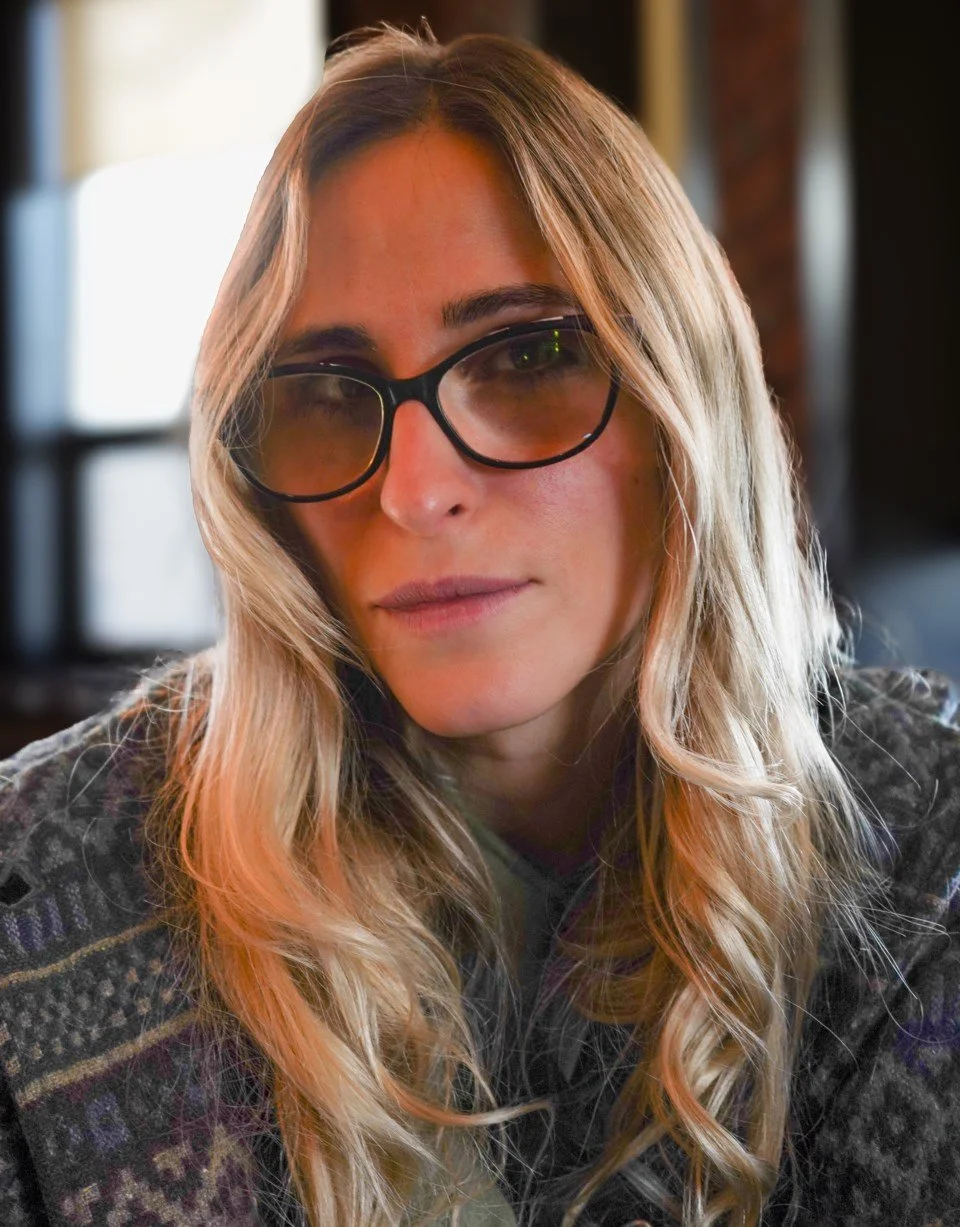
Taryn Henry and the practice of living creatively
Taryn Henry speaks about her life the way she paints—layered, intuitive, and deeply connected to place. She describes herself as an artist, a mother, and a spiritual practitioner, but those labels don’t exist in isolation. They blend into one another, shaping not only what she creates, but how she moves through the world. In listening to Taryn reflect on her journey, it becomes clear that her story isn’t about choosing one identity over another. It’s about learning how they coexist, evolve, and inform one another over time.
Taryn was born in Goderich and raised in Point Edward alongside her two sisters, growing up in a lakeside environment that would quietly imprint itself on her creative voice. She attended Bridgeview School before completing her high school education at Sarnia Collegiate Institute and Technical School (SCITS). Like many people raised in this region, Lake Huron wasn’t just scenery—it was a constant presence. The shoreline, the changing skies, the storms rolling in, the calm that follows; all of it became part of her internal landscape long before it appeared in her paintings.
After high school, Taryn’s life took a turn that reflected her strong sense of responsibility and family connection. Rather than heading directly into post-secondary education, she took time to help her family raise her nephews. It wasn’t framed as a sacrifice so much as a natural step. Even then, her decisions were guided less by rigid planning and more by intuition—a theme that would continue to surface throughout her life.
Taryn describes herself as spontaneous, a quality that ultimately shaped her entry into higher education. “I just woke up one day and said, I’m going to college,” she says. Acting on that impulse, she applied to three programs at Fanshawe College: Fine Art, Culinary, and Fashion Design. Each reflected a different expression of creativity, but all shared a common thread—working with her hands, trusting her instincts, and creating something tangible. When the acceptance letter for Fine Art arrived first, the choice felt effortless. “Those were my top three interests,” she explains, “and then I heard from the fine art program first and I was like, alright, that’s where we’re going.”
Art, however, was never a sudden discovery. Taryn had been an artist since childhood, influenced in part by her father, a self-taught artist who never had the opportunity to attend art school himself. Importantly, he never pressured her to follow his path. “He didn’t push me,” she says. “There was none of that.” Instead, both her parents offered something far more powerful—unconditional support. “They were so supportive my whole life,” Taryn reflects, acknowledging how rare and formative that kind of encouragement can be, especially in creative fields where doubt and instability often loom large.
After completing the Fine Arts program at Fanshawe, Taryn and seven classmates made a bold decision to continue their education together, relocating to Halifax, Nova Scotia to pursue their bachelor’s degrees. The move marked a period of immersion—both artistically and personally. “It was awesome,” she says, without hesitation. She lived downtown, above an old jazz bar and a restaurant called The Wooden Monkey, a detail that feels almost cinematic. It was a time filled with experimentation, conversation, and constant exposure to creative energy. Halifax offered a different rhythm than Sarnia, but one that allowed her to expand her perspective while still carrying home with her.
Years later, that chapter came full circle. In November of 2025, Taryn returned to Fanshawe College—not as a student, but as a guest speaker—presenting an artist talk to third-year Fine Art students in the same program she had entered two decades earlier. Walking back into the building triggered a strange sense of dislocation. “It was wild being back,” she says. “I felt like I had time travelled.” Her former studio space was no longer active, now repurposed for storage, yet some things hadn’t changed. “The studio still had the same smell,” she laughs, a sensory detail that instantly transported her back to her student days.
As a member who sits on the board of the Fine Arts Program Taryn was aware that Fanshawe College had cut its three-year Fine Art program and now offers only a first-year foundation program. For someone who understands firsthand the importance of sustained artistic education—not just for skill development, but for confidence, community, and critical thinking—the news was deeply disappointing. “I hope that we can still fight and get something,” she says. “Art is pretty fundamental to society. Right?” The question lingers, touching on broader conversations about the value placed on the arts within education and culture.
After completing her formal education, Taryn faced a question familiar to many artists: how do you sustain a creative practice while navigating the realities of adulthood? “How do I jump into this, be able to keep up a studio practice, but life happens,” she says. For a time, life meant a nine-to-five job managing a retail store. Art took a back seat, not because it had lost meaning, but because survival demanded structure and stability. Then came motherhood.
Today, Taryn is raising three children—two girls and a boy—and she speaks about them with a grounded warmth. “I love hanging out with them,” she says. “They’re chill.” Motherhood didn’t erase her identity as an artist, but it reshaped it, forcing her to reimagine what creative life could look like within the rhythms of family.
This fall marked a pivotal shift. Taryn moved into a space that finally allows her to maintain a dedicated studio—something she had been working toward for years. The impact has been immediate and profound. “I can come and go as I please,” she explains. “I paint every day. It’s my full-time thing.” That freedom has allowed her to work intuitively, responding to inspiration when it arises rather than forcing creativity into narrow windows of time.
That renewed focus carried into the summer, when Taryn completed her largest project to date. Alongside Kennady Rayn of Seventh Rayn, she co-created a large-scale public mural titled 216 at North Front, painted on the side of Roxy Lounge. The project pushed her beyond familiar boundaries. “It was such a cool project,” she says. “I had never painted anything that big before.” Working on that scale changed how she thinks about space, visibility, and public engagement. She hopes it’s the first of many public art projects still to come.
According to her website, Taryn’s work is deeply inspired by her home along Lake Huron’s shoreline. Her paintings often draw from visions, experiences as a psychic medium, and a deep sense of nostalgia tied to place. “I love to paint the beauty of a storm,” she explains. “The clouds remind me of all the challenges we face each day—our individuality and the power of surrendering and persevering.” Though her work is often categorized as landscape, she views that label as only a surface description.
“Painting is like a language to me,” she says. “It’s sometimes really difficult to explain a painting or write about it. Yes, it’s a landscape, or the sky, or a beach—but it’s so much more than that.”
That sense of depth extends naturally into her spiritual practice. Taryn has been reading Tarot cards for years, an interest that began in childhood. “My mom and my grandma used to get readings when I was a kid,” she recalls. “I would stay up late and watch.” Initially, she was drawn to the imagery on the cards as an artist, but over time the symbolism and energy work became deeply integrated into her life. In high school, she became fascinated with dreaming, astral projection, and lucid dreaming. “I’ve been into it forever,” she says. “It’s sort of a lifestyle.”
Her spiritual work often intersects with healing, particularly when supporting people through difficult experiences such as grief. At one point, she began creating aura paintings—visual interpretations of energy. “Everyone has an aura,” she says matter-of-factly. When asked if she has always been able to see them, she pauses before answering. “I guess so,” she says. “I had never put it into words what it was.”
In Taryn Henry’s life, art is not merely something she produces. It is how she processes memory, place, emotion, and energy. From running barefoot toward Canatara Beach as a child, to living above a jazz bar in Halifax, to standing in front of a towering mural in downtown Sarnia, her journey reflects a creative practice rooted in intuition, resilience, and an unwavering connection to home. Through paint, spirit, and lived experience, Taryn continues to translate the unseen into something others can feel—and perhaps recognize within themselves.
Visit Taryn’s website at teartist.ca and her Instagram is Taryn.Artist.

The healing power of music with Cynthia Fay
“I really like how people are with each other here, and the view of the water is beautiful. We’re lucky—it’s like a pocket of peacefulness.”Though Cynthia Fay wasn’t raised in Sarnia, she speaks of the city with deep affection. Born in Windsor to a close-knit Filipino-Trinidadian family, Cynthia is the oldest of three children. Her family lived in Toronto before moving to Sarnia, where her maternal grandfather, Lolo Fredo, had settled. While she grew up mostly outside the city, Sarnia has always held a special place in her heart.
When Cynthia eventually moved here as an adult, she was surprised by how quickly she felt at home. “The pace of life, the access to nature, and the closeness of the community gave me a sense of belonging I hadn’t experienced in larger cities,” she says. “I didn’t expect to feel so connected here.” One of the unexpected joys was discovering just how much creativity thrives in the area. “I thought I might miss that part of big-city life,” she admits, “but I found it right here in Sarnia. There are so many talented people— painters, musicians—and it’s inspiring to be a part of that community.”
Her own creative journey began with her grandfather, Lolo Fredo. “As a kid, I loved music because my Lolo Fredo loved to sing,” Cynthia says. She remembers how he would pick her and her brother up after school in Toronto, take them to Wendy’s for a treat, and then bring them home for karaoke. “That’s where I learned all his favourite songs.
”Music was woven into the fabric of her family life. “Everyone plays piano, and we even had a saxophone player in the family. My grandmother had ten children, and she made sure everyone had the chance to learn piano. We were really lucky and were given one from her so I could start learning.” Cynthia not only plays piano but also picked up the ukulele and guitar along the way.
Those early influences stayed with her. What began as lessons on her grandmother’s piano evolved into a lifelong passion that would eventually become her career. Cynthia went on to pursue a bachelor's degree in voice performance, along with certificates in jazz performance and composition. Later, she earned her master's degree in music therapy (MMT) and became a board-certified Music Therapist, an accredited MTA, and a Registered Psychotherapist (Qualifying).
Her introduction to songwriting came during high school, when she attended one of the few self-directed learning schools in Ontario. The unconventional environment suited her creative spirit. “I would just go to art and music,” she says with a laugh. During that time, she entered a songwriting competition, won, and was able to record her first EP. “That’s how I first started writing songs.”
Songwriting became a way for Cynthia to process her own emotions, but over time, she realized that music had an even greater power. “Music is more than just something that helps me handle difficult things,” she explains. “It can actually help someone else. That was the motivator for me to go beyond just songwriting for myself or singing for other people—because it could bring them some kind of comfort or peace.”
As a therapist, Cynthia uses music in many ways to meet the needs of her clients. Music therapy, she explains, has four primary methods: improvisation (spontaneous music creation), receptive (listening to music), re-creation (performing existing music), and composition (songwriting or creating music). Whether it’s a child struggling with anxiety, an adult recovering from trauma, or an elderly person facing memory loss, Cynthia finds ways to use music as a bridge.
Her creativity extends beyond therapy. Cynthia is also a visual artist who has created a colouring book titled “The Filipino Parol Colouring Book” available on Amazon. She was a finalist in the Canatara Beach Lifeguard Station mural competition with her submission titled Where the Water Sings, a piece that reflects the natural beauty and peaceful spirit of Canatara Park.
Now, Cynthia and her family are preparing for a new venture in downtown Sarnia – a restaurant and live music venue called “In the Pocket” at 106 Christina St. North. The concept combines two of the family’s passions: music and family. “It’s the live music venue where I want to invite all the musicians I know to come and play and jam,” she says with excitement. “And on the other side is the restaurant and kitchen. My mom is known for her Pad Thai noodles.”
The restaurant is more than just a business for Cynthia and her family. “By creating a space where food and live music come together, our family hopes to give people in Sarnia a place to connect, create, and celebrate culture.”
Looking back, Cynthia can trace the thread of her story all the way to her grandfather’s karaoke machine. What began as playful afternoons singing along to his favourites has grown into a career dedicated to helping others through music, and a life filled with creativity, family, and community.
In everything she does—whether guiding clients through therapy, painting visions of Sarnia’s natural beauty, or opening her family’s restaurant—Cynthia radiates warmth and passion. Her story is a reminder of how music can shape a life, heal a heart, and strengthen a community. Sarnia is lucky to have her voice, her vision, and her heart adding to the city’s creative rhythm. You can learn more about Cynthia by visiting her website for Bluewater Therapy Services.

Dr. Danielle Quinn’s journey home to Sarnia
When Dr. Danielle Quinn steps into her clinic at Sarnia Chiropractic and Performance Centre, she’s not just treating patients—she’s reconnecting with the community that shaped her. A Sarnia native, Danielle's journey took her across borders, into the world of elite athletics, and through the rigorous training of chiropractic medicine, only to bring her back home with a renewed passion for helping others move, heal, and thrive.
Danielle was born and raised in Sarnia, a city she has always called home in her heart. After completing high school, she took a leap that few in her hometown had attempted—competing as a triple jumper in the NCAA Division I Big Ten Conference while studying at Indiana University in Bloomington, Indiana. She was a proud Indiana Hoosier, balancing the demands of elite competition with the rigours of undergraduate education. But even as she soared through the air in triple jump events, she kept her feet firmly grounded in her long-term goal: a career in chiropractic care.
Following her time at Indiana University, Danielle pursued her Doctor of Chiropractic at the Canadian Memorial Chiropractic College in Toronto. It was a demanding program, requiring both scientific precision and a deep understanding of the human body. Her experience as an athlete gave her a unique perspective—she understood firsthand the toll that injuries, repetitive strain, and poor movement patterns could have on a person’s well-being. She knew she wanted to help others, particularly those who, like herself, sought to maintain an active lifestyle.
After completing her doctorate, the decision to return to Sarnia felt like the perfect fit. While Toronto had its opportunities, it didn’t have the deep sense of connection that home provided. Now practising at Sarnia Chiropractic and Performance Centre, Danielle is grateful to be back, serving the community that supported her along the way.
An avid runner, Danielle’s love for sports didn’t end with university. She actively participates in marathons, continuing to push herself physically and mentally.
The Pandemic’s Impact on Health and Wellness
When asked about the effects of the pandemic on healthcare and well-being, Danielle reflects on the two sides of the coin.
“It had both positive and negative effects,” she explains. “On one hand, many people had to stop doing the things they loved, whether it was exercising, socializing, or simply maintaining their usual daily routines. That was tough. It led to a lot of inactivity and even mental health struggles. But on the other hand, I think the pandemic also made people more aware of just how important those things are. Once restrictions were lifted, people really started appreciating their ability to move again. They got back to exercising, to participating in sports, and to taking care of themselves in ways they may be took for granted before.”
In her practice, she has seen firsthand how this renewed awareness has brought people in for treatment. Whether they’re returning to the gym, hitting the trails, or just trying to maintain an active lifestyle, patients are seeking ways to move better, prevent injuries, and stay consistent with their health goals.
The Best Advice She’s Ever Received
Everyone has that one piece of advice that sticks with them, shaping how they approach life. For Danielle, it came from her stepfather: “Be a plus one or a zero, but don’t be a negative one.”
She explains, “It’s a simple philosophy, but it’s powerful. A ‘zero’ day is an ordinary day, nothing spectacular but nothing bad either. A ‘plus one’ day is an extraordinary day, something great happens, you accomplish something, or you help someone. But the key is to avoid having a ‘negative one’ day—to not let things spiral in a way that drags you or others down. We all have control over our attitude and how we face challenges. It’s about making the conscious decision to be neutral at worst and positive at best.”
This mindset has carried her through the highs and lows of being an athlete, a student, and now a healthcare professional. It’s a perspective she shares with her patients as well—reminding them that progress, whether in movement, recovery, or personal growth, doesn’t always have to be monumental. Even a neutral day is a step forward, as long as they’re not moving backward.
Coming Full Circle
Returning to Sarnia, Danielle has found herself in a full-circle moment. The same streets where she once ran as a high school athlete are now the paths she takes on morning runs before heading to her clinic. The city that supported her dreams of NCAA competition and professional success is now the place where she gives back, helping others heal and move forward in their own journeys.
Her work at Sarnia Chiropractic and Performance Centre is more than just a job—it’s a way to uplift the community through health and movement. She sees patients from all walks of life, from athletes to office workers, young students to older adults. Her approach is holistic, focusing not just on treating pain but on empowering people to prevent injuries and lead active, fulfilling lives.
For those in Sarnia looking for guidance on movement, recovery, or simply improving their physical well-being, Dr. Danielle Quinn is more than just a chiropractor—she’s a testament to what it means to come home and make a difference.
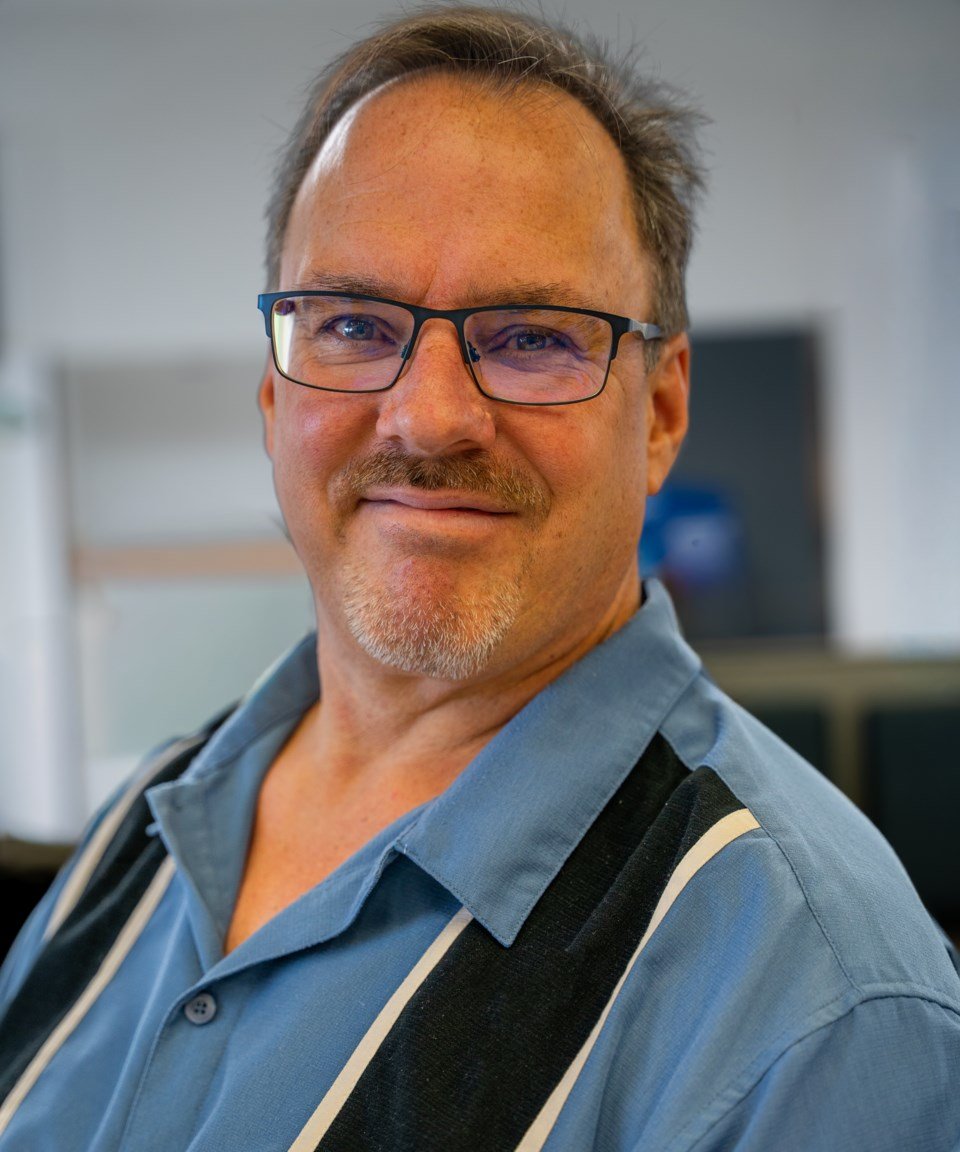
Framing a community: The legacy of Lou Sprenger
When you talk with Lou Sprenger, you quickly get the sense that his life has been shaped by two constants: hard work and an instinctive pull toward creativity. Lou was born in Kitchener, but in his early years zig-zagged across Ontario before his family eventually settled in Sarnia—the place that would become home in every sense.
He went to George Perry School and later to Northern Collegiate, where art classes came naturally to him. After high school, he chose a path that kept him outdoors: the Parks Operations and Services program at Lambton College.
“It had basically anything to do with landscaping or gardening, tree climbing and turf management,” he recalls. “That sort of thing.”
The program fit him well. Lou wasn’t the type to sit still, and he loved the satisfaction of seeing his work take shape in the real world. After graduating, he spent ten years with DeGroot’s Nurseries—ten years of learning how to “get it done and fast and right.”
Those lessons stuck with him when he eventually stepped out on his own. For 23 years, Lou ran a small landscaping business built on grit, sweat, and close relationships with clients.
“I was never the person who wanted to be as big as DeGroot’s,” he says. “I’m more of a person. I liked hiring one or two people and knowing exactly what we were doing. It wasn’t paperwork first. I was always a doer.”
But beneath the soil and the garden tools, something else was growing—something that had been part of Lou since he was a teenager carrying his first film camera. Creativity had always come easily to him, and design work in landscaping only deepened that instinct.
Then came the year 2000, and with it, a 3.2-megapixel Canon digital camera.
“I had kind of let go of photography for a while,” he admits. “But that first digital camera? That was the turning point.”
Not long after, he saw a call for volunteer photographers for Sarnia’s Celebration of Lights. He put his name forward. That one step opened a new door: he began sharing his photographs with Tourism Sarnia-Lambton, who used them for magazines and online features. They were always looking for images that reflected the community, and Lou had a way of capturing moments that felt both familiar and special.
From there, his volunteering expanded. He got involved with Cogeco’s “Your TV,” operating video cameras at hockey games, community events, political gatherings—wherever people came together. Over time, he became the one responsible for providing the images used in the station’s slideshows: scenes of Sarnia-Lambton’s people, events, and changing seasons.
It’s a role he still pours himself into.
“I put about 30 to 40 hours a month into editing and putting the images together,” he says. “Fifteen years ago, it was one or two events. Now it’s two, three, six, eight events. I try to promote individuals, smaller groups. If it’s a first-time event or a little group raising money for charity, I want to help promote them.”
For years, Lou would quietly weave his way through crowds at events, blending in as he captured the moments unfolding around him. These days, things look a little different. He now uses a mobility scooter, and he laughs when he says, “I don’t hide in a crowd anymore.”
The scooter became necessary because of Spastic Paraplegia Type 4 (SPG4), a hereditary condition that causes progressive stiffness and weakness in the legs. “My father had it, and my grandmother had it, and her grandmother had it,” Lou says. It wasn’t until recent years, with advances in DNA testing, that clear diagnoses became possible. Before that, the condition was often labelled as Little’s Disease.
As the symptoms progressed, landscaping became too painful. Eventually, the business he built over decades faded away.
“It just got to be too much,” he says quietly. “Too painful.”
Letting go was difficult. Work had always been part of who he was. The idea of retirement scared him. “I thought, ‘God, I’m going to sit at home and do nothing.’”
But that isn’t how the story ended.
Lou didn’t stop working—he simply shifted his focus. Photography became more than a hobby or a volunteer role. It became his way of staying engaged, staying useful, and staying present in the community he loves.
“Now,” he says with a smile, “I’m sitting at home doing something.”
If you’ve attended events in Sarnia, there’s a good chance you’ve seen Lou—either in person or through the photos he shares. His images show the city at its best: the small victories, the neighbourhood gatherings, the faces of people who might otherwise go unnoticed. He documents the life of this community with patience, care, and an unmistakable sense of pride.
In every frame, there is an intention. In every project, hours of unseen labour. And in every conversation with him, a genuine love for the people who make Sarnia what it is.
Lou Sprenger may navigate the world differently now, but his commitment to capturing its beauty hasn’t dimmed for a moment. Through his lens, Sarnia sees itself—honestly, generously, and with heart.
And at the end of the day, his dedication reminds us of something simple and powerful: that storytelling doesn’t always require words. Sometimes, a single photograph is enough to honour a moment, a community, or a life.
And because of Lou, Sarnia has thousands of them—quiet, thoughtful glimpses into who we are, preserved by a man whose passion for this place has never once wavered.
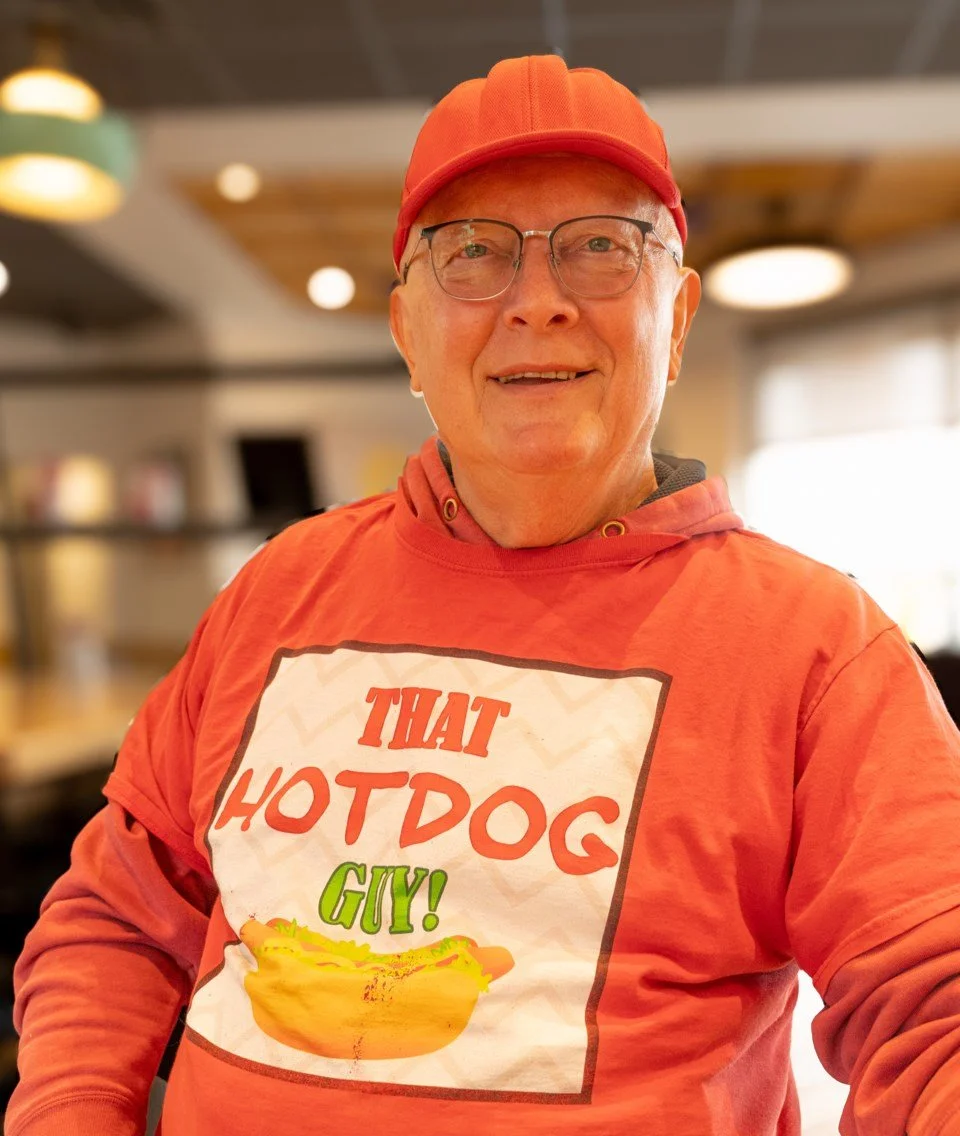
Trevor Pettit: That Hot Dog Guy
If you’ve ever wandered past a hot dog cart outside DeGroot’s Nurseries in the spring or grabbed a bite during the Petrolia Fall Fair, there’s a good chance you’ve met Trevor Pettit—better known as That Hot Dog Guy. He’s a familiar, friendly presence at community events across Sarnia-Lambton, serving up more than just hot dogs. Behind the apron is a story that stretches from construction sites to Costa Rica, from Queen’s Park to Quinn Drive. Trevor laughs “Ever since I was a kid, I loved hot dogs, and I used to be fascinated by the Dominion store back in the day where they had the hot wieners on the rollers.”
Born in Hamilton, Ontario, Trevor’s work ethic took shape early. As a teenager, he spent his summers helping his father with contracting jobs—until a newspaper ad caught his eye. “It was for a vacuum cleaner sales job,” he recalls. “And I thought, why not?” It was his first taste of sales, and he never looked back. That knack for connecting with people eventually led him to become the Ontario Sales Manager for Levi Strauss Ladies Wear. When the company closed, Trevor transitioned into a role with Valley City Manufacturing, a company that specialized in architectural woodware.
But another calling soon came knocking.
In 1995, Trevor ran for office as a Progressive Conservative and won the seat for Hamilton Mountain, serving as a Member of Provincial Parliament until 1999. “Even when I was at Queen’s Park, I never lost that blue-collar part of me,” he says. “While some colleagues enjoyed fine dining, I preferred grabbing a hot dog from a street vendor and chatting with people during my lunch hour.”
It was during one of those lunchtime walks near Queen’s Park that a seed was planted. Trevor got to know a vendor who ran a hot dog cart nearby. “I remember telling myself, one day, I’m going to do that too.”
After politics, Trevor ran a successful consulting business, continuing to work with the provincial government for another decade. Then he hit pause on the grind altogether and decided to retire—with a twist.
“We moved to Costa Rica,” he says. “It was beautiful. But after two years, we missed Canada—especially the community feel.”
Trevor and his wife returned to Ontario and settled in Goderich. That’s when his childhood love of hot dogs—and that dream planted years earlier outside Queen’s Park—came full circle.
He launched That Hot Dog Guy, starting with a location outside the local Canadian Tire store. The reception was warm, and Trevor soon began appearing at special events in the area. From there, the business grew, taking him to places like the Foots Bay Marina on Lake Joseph, where he spent two summers feeding cottagers and boaters from May to September.
In 2021, his journey brought him to Sarnia. Home Depot invited him to serve at an Employee Appreciation Day and after a successful event they wanted him to be an on-site vendor but ran into a hurdle: their corporate policy didn’t allow on-site food vendors. Not one to give up easily, Trevor worked with the City of Sarnia to secure permission to set up nearby on Quinn Drive. From there, Sarnia became home turf.
Today, you’ll find That Hot Dog Guy at events like Canada Day in Camlachie, the Sarnia fireworks celebration, Beats on the Street, and at DeGroot’s Nurseries during the spring and fall seasons. While he no longer sets up daily, Trevor is busier than ever with festivals, corporate events, and community gatherings.
And he’s not just there for the sales—he’s there to give back. A portion of his proceeds regularly goes to local charities, including minor baseball programs and the Alzheimer’s Society. “I’ve always believed in supporting the community that supports you,” Trevor says.
From managing sales teams to managing mustard bottles, from making legislation to making lunch—Trevor’s journey is anything but ordinary. And through it all, one thing has stayed the same: his love of connecting with people.
“I get to do something I enjoy, meet great folks, and be part of the community,” he says. “That’s what it’s all about.”
So, the next time you see That Hot Dog Guy, remember—there’s more than a grill behind that cart. There’s a lifetime of stories, service, and a whole lot of heart. You can learn more about That Hot Dog Guy at https://www.facebook.com/BESTSTREETMEAT
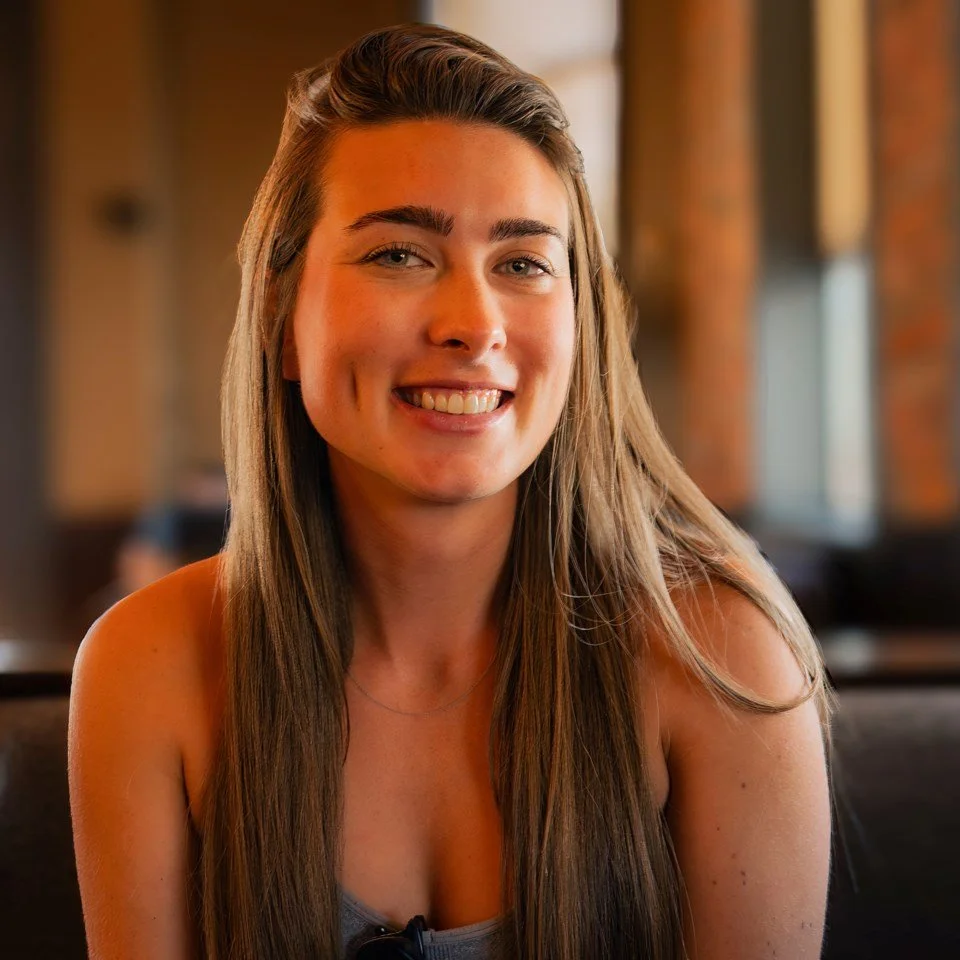
Firefighter Dylan Kenny: A Life of Service and Community
When Dylan Kenny moved to Sarnia from Barrie, Ontario four years ago, it was more than just a career move—it was the beginning of a calling fulfilled. Today, she serves as a firefighter with Sarnia Fire Rescue Services, one of just eight women with the service.
For Dylan, becoming a first responder was never really a question of if, but how. Both of her parents built their careers as police officers, and she grew up immersed in that world of service and public safety.
“As a kid, I thought I’d become a police officer too,” Dylan shared. “But my parents encouraged me to think about other first responder roles. They really pushed me towards fire, and it’s amazing. I would never go back to anything else.”
Her path to the firehall began at Seneca College, where she completed a three-year Fire Protection Engineering Technology program. After that came time out west as a wildland firefighter, battling blazes in rugged landscapes. She returned to Seneca to complete the Firefighter Pre-Service Education and Training program, then volunteered with a local fire department before finding her place in Sarnia.
But firefighting isn’t her only commitment. Dylan is also a member of Team Rubicon, a veteran-led humanitarian organization that serves communities before, during, and after disasters. “It’s a great organization,” she explained. “My dad found out about it first, and he was the one who suggested I join.”
Her work with Team Rubicon has taken her across the globe—New Zealand, British Columbia, and Kentucky. “The camaraderie is very similar to the fire department,” she said. “You show up, you don’t know anybody, and then when you leave, you are connected.”
That sense of connection is something Dylan has also found in Sarnia Fire Rescue Services. “The team here is like a second family,” she said. “Honestly, I didn’t plan to stay in Sarnia. I’ve always been a homebody, so being away from my parents and sister was hard. But the people I work with—they’re the reason I stayed. If they weren’t who they are, I wouldn’t still be here.”
Outside the firehall, Dylan’s life is filled with animals, sports, and the outdoors. “My family and I always end up rescuing some sort of animal,” she laughed. “We’ve had four raccoons, birds, squirrels… my dad even has a wild fish at the cottage that he feeds by hand.”
Here in Sarnia, her loyal companion is Jax, her dog, who never misses a walk along the river.
Athletics have also been a constant thread in Dylan’s life. She grew up playing ringette, but when she arrived in Sarnia, she swapped her skates for hockey. “All the guys here were playing, so I thought, ‘Okay, I’ll give it a shot.’ I’m not the best player out there, but I hold my own,” she said with a laugh. Standing six feet tall, she’s also a natural on the volleyball court.
When asked what she loves most about Sarnia, Dylan doesn’t hesitate. “The community here is so interlaced. You meet someone new, and within minutes you find out you already know four people they grew up with. It’s such a close-knit place.”
And then there’s the water. “Every single day I’ll be in the water. The beaches here are beautiful. The people are great. Sarnia has that small-town feel.”
For Dylan, Sarnia has become more than just a place to work—it’s a place to belong. Her story is one of courage, resilience, and heart, and she embodies the very best of what it means to serve. Whether it’s rushing toward danger as a firefighter, lending her skills to disaster relief around the world, or simply being a kind neighbour, Dylan is the type of person who makes a community stronger.
Sarnia is lucky to have her.